Dear friends, skeptics, purists, and picnic philosophers,
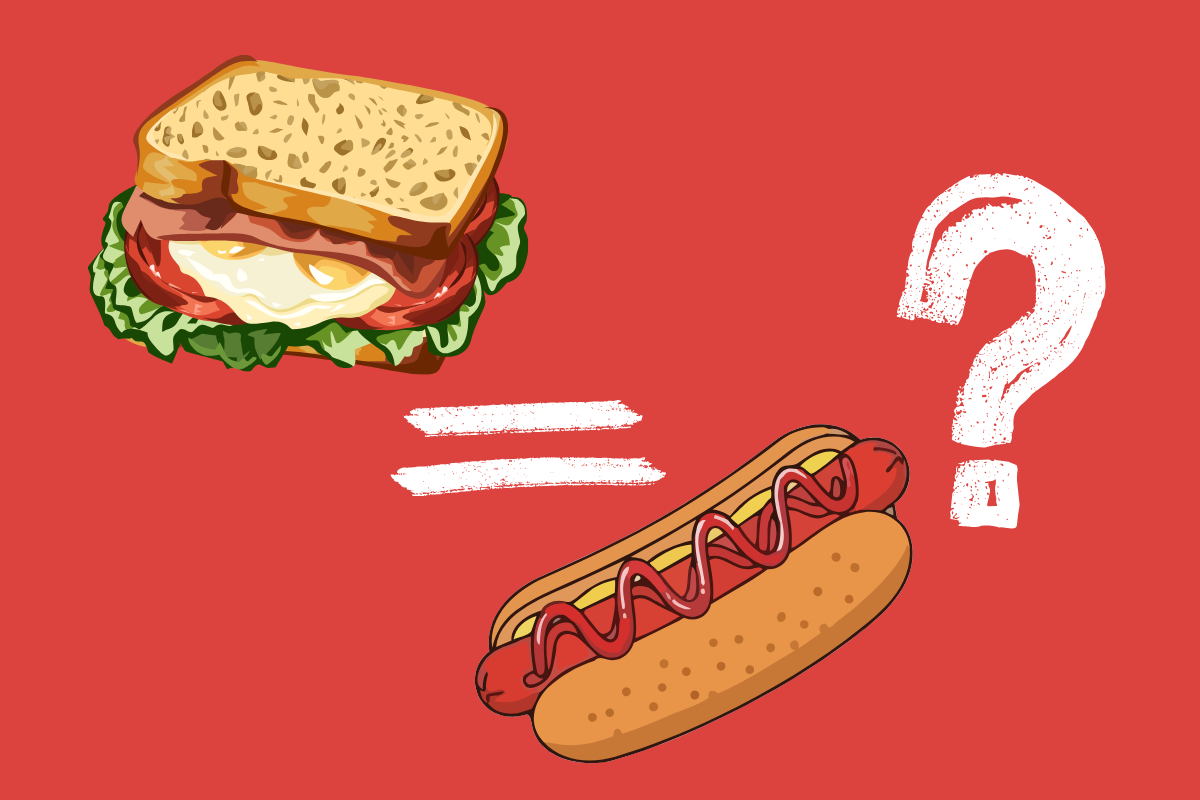
The debate regarding whether a hot dog qualifies as a sandwich often transforms what might start as a friendly chat into an emotional argument. The discussion, whether at a lunch table, in a backyard barbecue or on social media, quickly escalated, with participants making strong claims on both sides about the classification of hot dogs as a type of sandwich. Some people firmly state that hot dogs are not sandwiches and belong to a unique category, while others argue that they share enough similarities with sandwiches to be included in that classification.
Rather than taking sides, I propose a balanced approach that acknowledges both perspectives through logic, culture, and real-life experiences behind each side.
If we examine hot dogs through this lens, we can claim that they are not sandwiches due to their distinct cultural associations. Hot dogs have become iconic foods tied to gathering like ballgames and barbecues, embodying special occasions such as the Fourth of July. They can be found at street vendors and are typically served in aluminum foil or paper trays, adorned with toppings like mustard or onions, and consumed during moments of relaxation and celebration.
Moreover, the structure of hot dog buns is fundamentally different; they are usually cut along the top, featuring a smooth texture from steaming, and are designed to hold the sausage securely inside.
Linguistically, the distinction between hot dogs and sandwiches is further emphasized. When ordering at a concession stand, nobody typically says they want a hot dog sandwich. Similarly, at barbecues, children generally request a hot dog when they are hungry, not a sandwich.
These linguistic nuances highlight the importance of how we categorize food. Language reflects our perception and experiences with food, and since hot dogs lack the same cultural associations as sandwiches, it is logical to conclude that they do not belong to the sandwich category. Ignoring this distinction would dismiss the genuine experience and understanding people have of food beyond mere classifications on paper.
On the other hand, those who argue that hot dogs are sandwiches are not merely being contrarian; they provide logical reasoning for their position. A sandwich is typically defined as any food item featuring something placed between or on top of slices of bread. By this definition, hot dogs fit comfortably into the classification.
From both a dimensional and functional standpoint, hot dogs operate similarly to sandwiches: they consist of a meat product encased in a sliced bun, and they are designed to be eaten with hands while allowing for the addition of condiments.
This argument can be strengthened by considering the variety of food items already categorized as sandwiches. Submarine sandwiches, hoagies, grinders, and hero sandwiches all consist of a roll that is partially cut open, akin to how hot dogs are served. Similarly, wraps and pitas, which may not closely resemble sandwiches, are typically categorized as such, even if they don’t fit the strict definition of something being placed between slices of bread.
If we broaden the classification of sandwiches to include these variations, the argument for including hot dogs becomes more nuanced and often rests on cultural context or personal opinion. In many classification systems (be they food-based, scientific or linguistic), function and structure take precedence over culture or custom.
Both camps pursue a shared goal: to create meaning and understanding. People generally value precision in definitions and respect cultural context. We require language that balances precision for practical use with enough flexibility to align with how individuals view and experience food in their daily lives. Conflicts arise when either side insists that only one category can effectively encapsulate all facets of a subject, demanding a singular label to unify structure, identity, history and emotional resonance.
Historically, no resolution has emerged other than pressuring one side to concede, until now! The solution lies in developing a layered classification framework. For instance, hot dogs can be categorized as a distinct food type while simultaneously being classified within a broader category of sandwiches. Thus, we can affirm that hot dogs are considered a type of sandwich yet also distinct in their own right.
This approach is not overly complex and reflects how classification systems typically function. A square is recognized as a subset of rectangles; however, not all rectangles are squares. In the same way, we can categorize hot dogs within the realm of sandwiches without eliminating their distinct identity. Embracing this layered classification approach allows for unity in understanding while respecting the unique cultural significance of hot dogs. By recognizing the diversity of food experiences, we can foster a more inclusive dialogue that values personal associations with food, rather than confining ourselves to rigid definitions.
In conclusion, rather than digging in our heels and arguing over labels, let’s appreciate hot dogs for what they represent: deliciousness, culture, and nostalgia, while also acknowledging their place within the broader context of sandwiches. This balanced perspective may just lead to a more harmonious celebration of our favorite sandwiches, inviting everyone to the table without the need for dispute.
Sincerely,
Dev Hadwani