



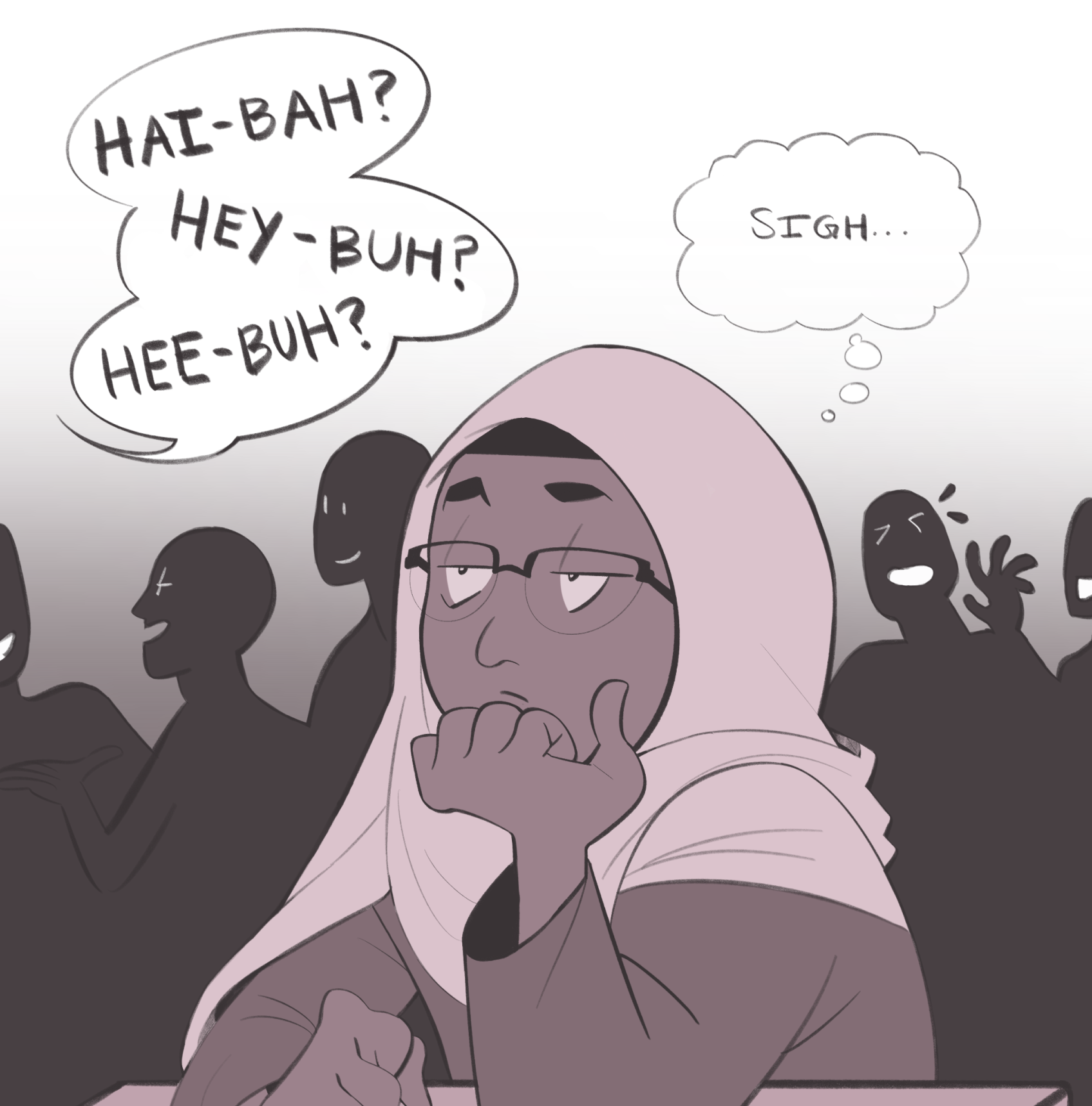
By the time I hit the senior year of high school, I didn’t really care how my name was pronounced — I was used to it. The short pause before the teacher read the first name on the attendance sheet on the first day of school, I always knew it was my name coming.
Every school year, I heard a different pronunciation of my name. It didn’t bother me, but it always reminded me that I was the different kid in class.
I was six years old when I landed at O’Hare airport with black hair, brown skin and a life I didn’t understand I was leaving behind. When I began elementary school, I clearly stood out in a classroom of students that looked nothing like me.
At home I spoke Urdu and Hindi with my family, but at school it was English. Slowly, I grew accustomed to belonging in an environment that felt different. I didn’t really know what was going on and I didn’t fully understand that we were moving to a different country, one where my language wasn’t the one most commonly spoken and not many people looked like me.
Since then, I’ve grown up in between cultures: born in Saudi Arabia, ethnically Indian and raised in America. I began understanding the subtle and obvious differences in how people dressed, spoke and expressed themselves. I quickly learned the art of code-switching.
I held my culture close when I was with my family, while adapting to the expectations around me.
I started wearing the hijab when I was very young, and that sense of alienation grew deeper. I knew I stood out in crowds. I noticed the curious or judgmental reactions I received, but I also began to notice others’ quiet struggles to fit the expectations too.
I still remember opening my lunchbox in elementary school, the smell of my mother’s biryani, an Indian rice dish, receiving glances of curiosity from my classmates. At that moment, the difference felt like something to take pride in, but when one classmate wrinkled their nose at the unfamiliar smell, I became self-conscious. That moment made me realize how easily differences could be misunderstood.
As I was learning to accept my identity, the world around me was shaming it.
The earlier unfamiliarity seen in my classmates resembled the media I consumed; multiple travel vloggers intentionally cover poorer, underdeveloped areas to reinforce a single story for content and views. While those realities do exist, they aren’t completing the entire story as they deliberately ignore the development and complexity of the nation. Watching this representation made me realize why all those differences felt so visible.
Yet, our culture is easily used to fit their narratives without the same judgment attached to the people it comes from: Scandinavian scarves, henna stains, jewelry, Prada Kolhapuri shoes. In those moments, standing out in a classroom didn’t matter as much when people formed narratives about me before I even spoke.
Moving countries, choosing to wear the hijab at a young age and feeling out of place at times has shaped my perspective on the world, but more importantly, it has shaped how I view myself. At first, I thought that these differences were something to manage, but over time I’ve realized that what once was self-consciousness has now turned into clarity. I’ve learned that being different is not something I need to fix, but something to embrace.
The pause before my name was never the problem; it was what it represented.