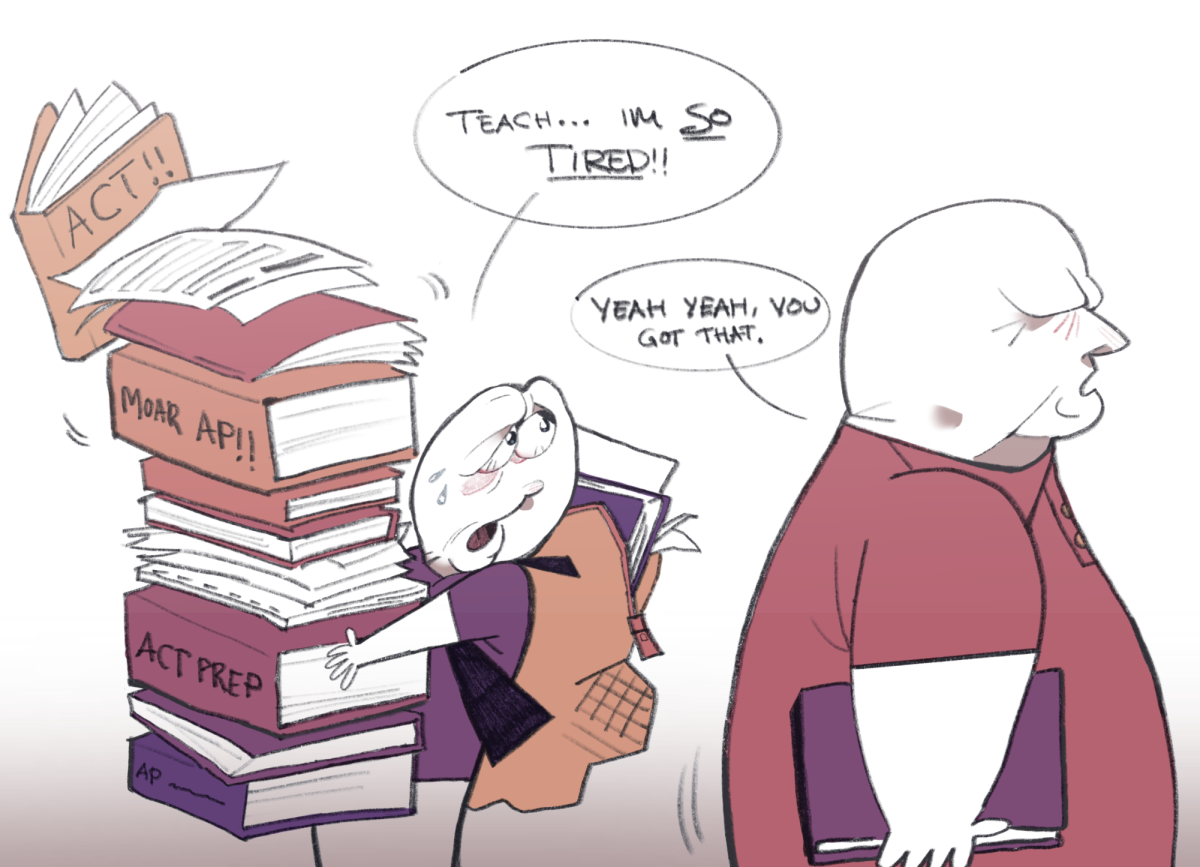
In April and May every year, first comes the ACT, either practice or the real thing, then two weeks of AP exams, ending the year with finals the next week—high school students learn to dread these months with their intense schedule. While AP exams and finals can’t change, there is one of those variables that can move: the ACT.
As a junior myself, these past few weeks have been extremely stressful. After the ACT, I had barely three weeks to study for three AP exams, and keep up with my regular work that seemed to be piling up at the same time. Plus, now that my exams are done, I have to finish final projects and assignments that I didn’t have time for before due to the exams.
It’s not just juniors who feel the weight of this. Freshmen tend to have many finals, and I know I was overwhelmed as a freshman. Sophomores also are dealing with finals, and are oftentimes experiencing their first AP tests.
Every school takes the ACT at different times. In fact, it’s largely up to the school when their students take the exam. According to an Illinois State Board of Education ACT FAQ, juniors will take the ACT in the spring, but it does not specify when.
With this line of thinking, the ACT doesn’t have to be in mid-April. Schools could schedule their ACT in March, before spring break to separate it from the stress of end-of-year exams.
There’s more benefits to this than just lowering stress for students. Students would then have more time to potentially take the ACT again, if they wanted to try and get a higher score.
The American Psychological Association found that teens report stress levels even higher than adults.
High schoolers have little control of their stressors, only how they handle them. If schools take the initiative to limit causes of stress, then pressure on students during that short period of time will decrease, and become more manageable.
It’s a simple solution, but it’s one that could be very effective. The ACT and AP exams are both valued exams, so allowing them time to stand on their own would help distribute student’s workloads.