
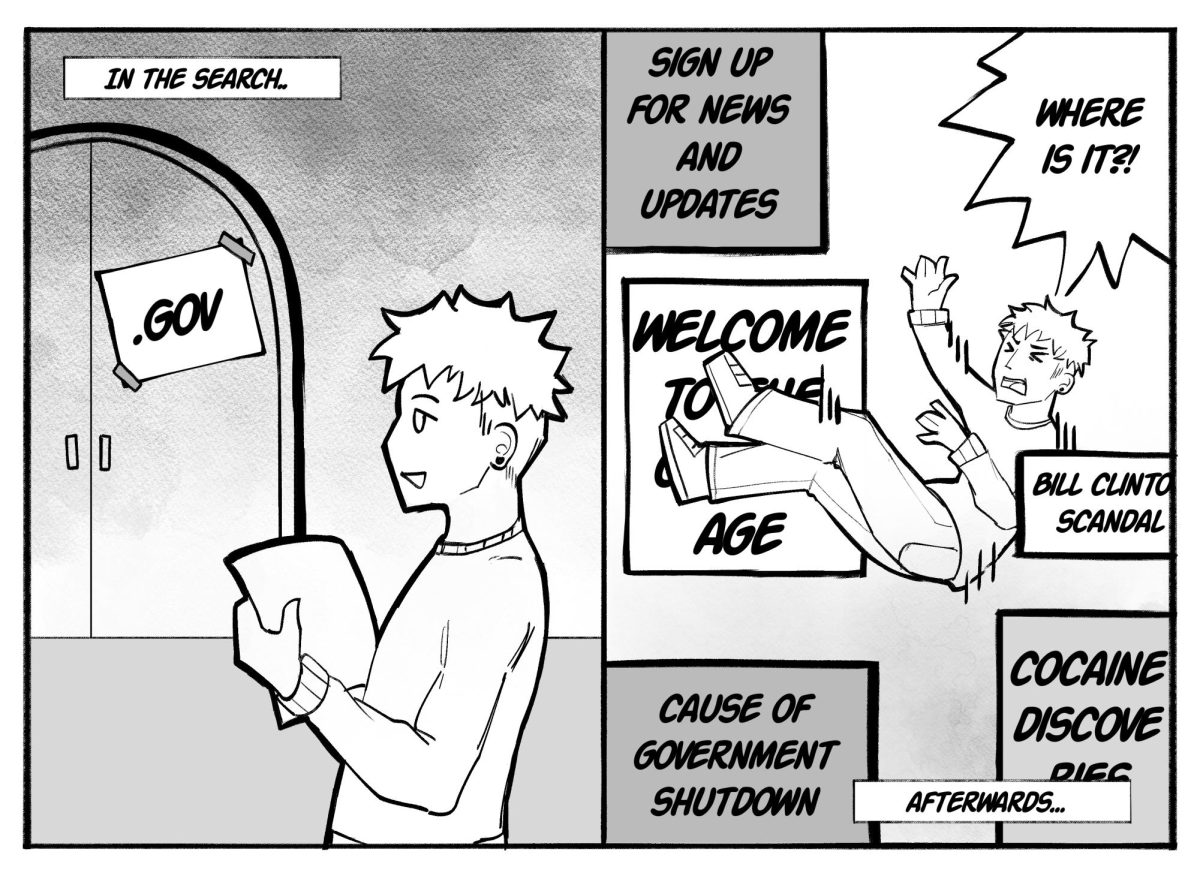
When researching for a school project, students are often told to use reliable sources, and most often, those sources end in “.gov.” But what happens when “.gov” starts spreading bias and harmful information?
The U.S. government needs to stop using its platforms to spread a political agenda; by changing the nature of these websites, people around the world are being shielded from the important information needed to be knowledgeable about politics and recent events.
The idea behind “.gov” was that these websites were run by the government to share the most bare-bones, unbiased information available. It was a place for students (and anyone else) to gather information on topics without worrying about the reliability of the source. Thus why the shift in these websites has become harmful.
The most blatant shift so far has been the official White House website, WhiteHouse.gov.
Upon opening the website, you are bombarded by a pop-up that asks you to subscribe to updates, which isn’t bad in theory except for the fact that there is no way to close it out. So you are forced to either subscribe or view the website with half of it blocked by a pop-up. This shields information for a party’s political gain.
Unfortunately, this isn’t the only pop-up. During the government shutdown, multiple government websites, including WhiteHouse.gov, had pop-ups degrading the democratic party, saying that the democratic party is at fault for the shutdown.
These pop-ups are harmful for readers trying to gain an unbiased understanding. Stating that the democratic party is at fault for the shutdown is an untrue statement that shifts the blame to an issue much larger than party debate.
Pop-ups, however, aren’t the only thing discrediting these government websites. Upon clicking on this history tab of the website, you are presented with the option to view a timeline that is supposed to share an accurate history of the White House, but when viewing, readers can quickly see that it is not the case.
The major events timeline begins with seemingly normal architectural history surrounding the white house, and then things get dicey. The timeline then showcases things such as “The Bill Clinton Scandal,” “Muslim Brotherhood Visit,” “Cocaine Discovered” and “Trans Day of Visibility.” All of these moments signify times from previous presidencies that showcase what the Trump administration views as downfalls or moments that discredit the former presidents.
Not only are these “events” completely random and unimportant to a general timeline of the U.S. White House, but the images and content attached to them are extremely inappropriate and, honestly, unprofessional. Multiple attached images showcase drug use and barely clothed individuals, which can be extremely sensitive for any person, no less a student, trying to simply gain information about their government.
A website that is supposed to be used as a resource is now being abused as a petty and unprofessional way for the White House to spread its political agenda and villainize anyone who came before the Trump Administration.
While it is acceptable for the predominant party in the white house to share their beliefs and agenda, doing so in this manner is harmful and childish.
The U.S. government needs to work harder at making its websites unbiased, reliable sources so that everyone can remain informed about current and past government happenings. If you are looking to stay informed using unbiased sources, check out NPR [National Public Radio] or AP News. Knowledge is of great value, and by keeping yourself informed, you will remain unaffected by the pushing of political agendas or misinformation.











Whome • Jan 20, 2026 at 5:55 pm
Agree . . .gov sites are now extremely biased and politically focused instead of being balanced and impartial