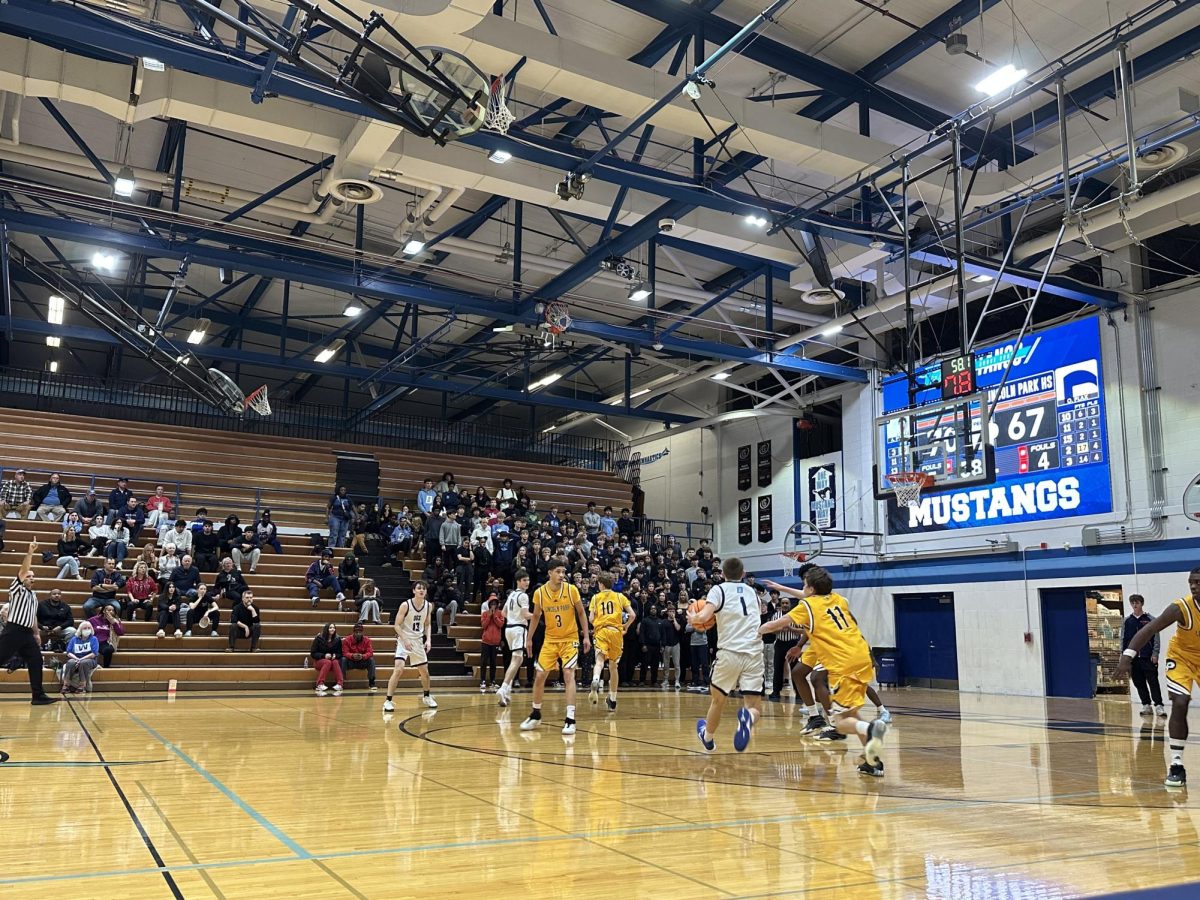
After over 60 years of back-and-forth discussion, the IHSA board has required a mandatory 35-second shot clock for boys and girls varsity basketball games for the 2026-2027 season. Illinois will be joining the list of 32 other states that require a shot clock at the high school level.
Out of the 31 games the boys varsity basketball team plays, 18 will be played with a 35-second shot clock, as the current rules allow for teams to play with the shot clock with agreement from both teams. Boys varsity basketball head coach Zach Miller went into more depth with his viewpoints on the idea and the impact this will have on the game.
“I’m a huge fan of it, I think it’s great for the game at the high school level, [and] it should have been implemented a lot sooner. I think it will truly help the kids in learning the game through another lens,” Miller said. “It benefits better defensive teams because it’s almost like a fire drill; once the shot clock gets into single digits, people start panicking.”
Miller explains how this will affect future planning in strategizing game plans.
“I think there’s definitely going to be a lot more zone defenses being played because of how much of the time gets eaten up, so we will most likely see a change in coaching philosophy from other coaches,” Miller said.
Girls’ varsity basketball head coach Lyndsie Long shares her mixed viewpoints on how this will affect girls’ play.
“At first, I was completely against it because now that’s a whole different aspect of the game that needs to be covered, but after practicing with it a few times, you’re usually getting the shots off anyway in that amount of time. Although now strategy will play an even bigger role in the game as a whole, I don’t think it’s going to be that bad,” Long said.
Long follows up by explaining the differences she expects to see in the girls’ game.
“I think we are going to continue to see zone defenses being played. I believe, though, that the way that the coaches will now play their zone defenses will definitely be a lot more intense because now they have that factor of the shot clock,” Long said.
Sophomore guard Abby Stapleton views implementing the shot clock as a learning opportunity for players.
“I think the shot clock is definitely going to be something new for players and another aspect of the game that coaches will now have to cover. \At the start of the season when we heard that the shot clock was going to be required for next year, we weren’t really sure how to react. But after practicing with it and playing with it in two of our games, we think we will be able to adjust,” Stapleton said.
As for junior varsity and freshman basketball games, the decision for using a shot clock will be made by individual conferences. For non-conference games, the competing teams will have to reach a mutual agreement to utilize the shot clock.
Miller shares what he thinks will happen with the shot clock in junior varsity and freshman games.
“As of right now, I think the shot clock will remain only with the varsity games; we may see a few games here and there being played with the shot clock in the other levels but, we as a program are lucky enough to have [Coach] Tim Cappelen running our shot clock. [However]for other programs it’s a lot more difficult for them to find someone like him,” Miller said.
Long emphasized her opinion on the time of 35 seconds for the girls’ side.
“I think 35 seconds is good enough for the girls’ side because in the collegiate level, they are only taking off five more seconds so its not that much. We also have to understand that not everyone is playing at the next level so we also have to understand that some of these girls are still learning the game,” Long said.
Miller, however, has different viewpoints on the time of the shot clock.
“I think it should go down to 30, let’s do it exactly how college does it so that the players who are going on to play at the next level have that smoother transition,” Miller said. “I think for the first few experimental years of the shot clock it will stay with the 35-second duration, to get more coaches comfortable with it, but slowly as time goes on I think we will see a lot more changes with it.”