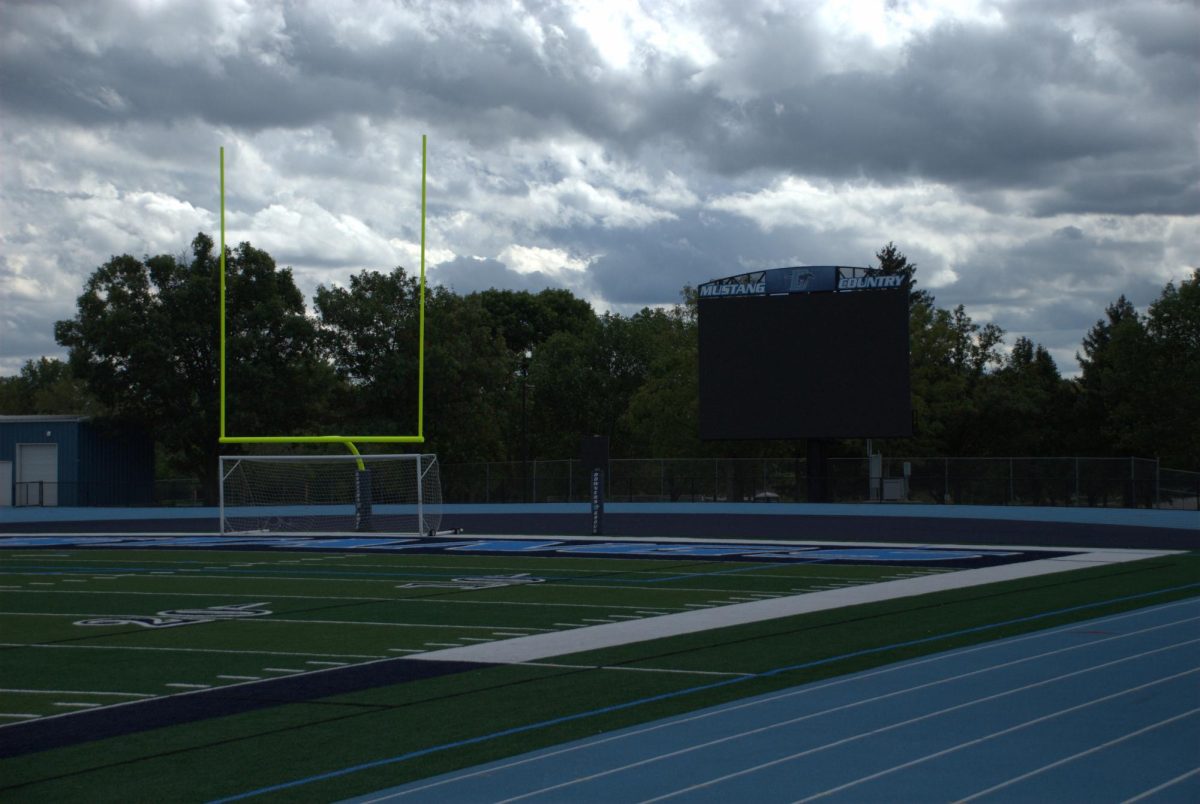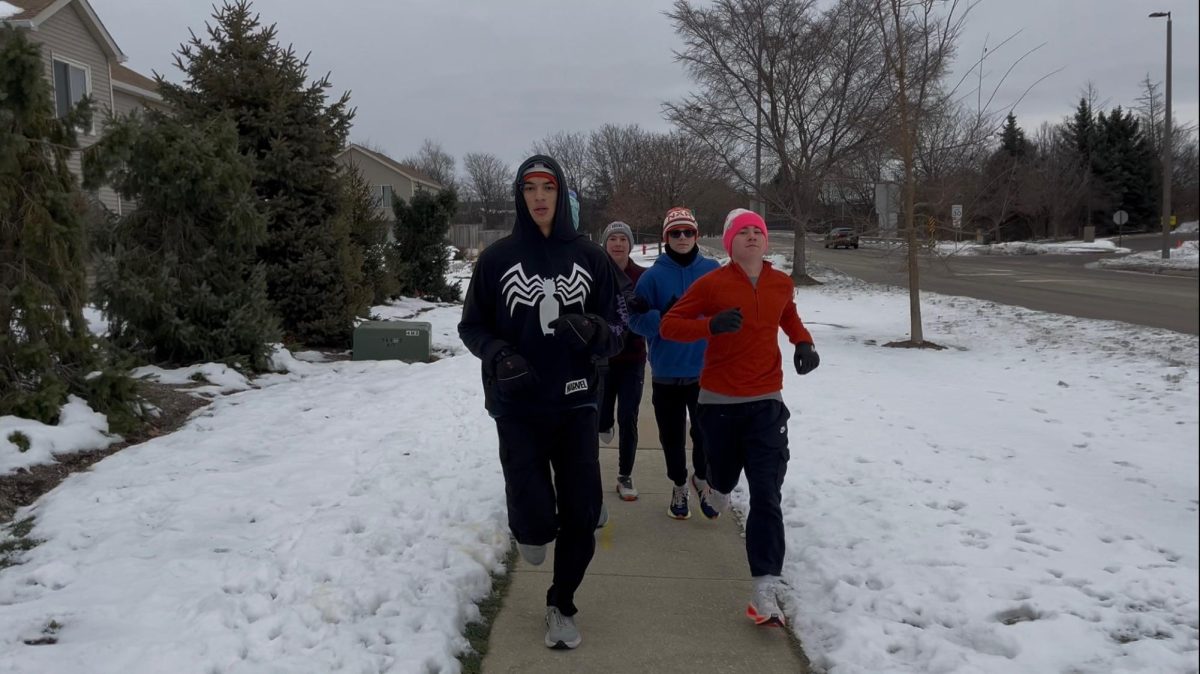
With the time in between cross country and track and field seasons, DGS runners are forced to face the Midwest winter to continue their training. Whether snowy, icy or something in-between, these athletes understand the work ethic it takes to succeed in their upcoming season.
Senior runner Ethan Traugott highlights the significance of not only the physical benefits of staying active, but also the enjoyment he gets from running with his teammates.
“It’s been fun so far. It is a unique experience; some days it can be very slushy, making it more dangerous, but more fun just hanging out with people and running together,” Traugott said.
By the time school ends, it is nearly dark outside. Senior runner Audrey Dunn highlights the challenge that comes with running in a sunless environment.
“Sometimes I find it challenging to find motivation to run in the winter months because it’s really cold and the sun sets really quickly. It’s definitely helped me mentally prepare for tough conditions and help me become a stronger runner, mentally and physically,” Dunn said.
Traugott further adds how he combats this mental challenge.
“I just want to go to bed after a long day of school, but it’s been fun to keep accountable with friends, and I think that helps against the mental challenges, doing it together instead of just by yourself,” Traugott said.
Running mainly outdoors in winter nights comes with its complications: the safest area to run. From managing icy sidewalks to snow built up streets, these athletes learn to analyze conditions and maintain a focus on their safety first.
“If one of us slips, then we’re all going to slip, so keeping space helps prevent that. Also, sometimes the middle of the roads are better than the sides because with shoveling or snow plows pushing snow up on the sides,” Traugott said.
Additionally, clothing is a strategy that helps these athletes stay safe and healthy in these harsh climates.
“Underrated gear like hats and gloves are great. People like to keep their chest warm, but they always forget about their head and hands,” Dunn said.
Furthermore, Traugott adds a key element to consider: sweat.
“Layers are essential. I’d say you want a cotton base layer to absorb sweat so it doesn’t make you colder in the winter,” Traugott said.
Track season begins in mid-January; until then, the DGS runners continue to train consistently to prepare.
“Every day we run outside, five days a week, but we are encouraged to run on our own on Saturdays, getting ready for the beginning of track season,” Dunn said.