


“It sounds nice in theory to say she has the right to an education … but if those rights are being violated, there’s no one to actually protect them,” English teacher Riley Love said as she described the fears she has for her daughter, Mila Naff, in light of the recent government funding cuts to programs related to special education.
As someone diagnosed with a rare genetic disorder associated with intellectual and developmental delay, Naff is a student who benefits from the local inter-district special services program, School Association for Special Education in DuPage County, or SASED. With funding cuts for programs like these all around the country, Love worries that her daughter won’t get the support she needs.
In March 2025, President Donald Trump issued an executive order that would effectively dismantle the U.S. Department of Education, claiming that the department had failed American families. In lieu of federal control over education, the order claimed, the power should be returned to the states to manage their education programs.
Massive layoffs followed this executive order, reducing the department to half its original size. By October 2025, the Trump administration had laid off 460 more employees and fired almost every special education employee in the U.S. Department of Education.
The U.S. Department of Education is crucial for most American families, providing financial aid for students and dispersing funds for low-income families. The special education branch of the department, known as the Office of Special Education and Rehabilitative Services, is responsible for around $15 billion per year to protect the rights of students who receive special education, like Naff. In the United States, there are around 7.5 million students with disabilities.
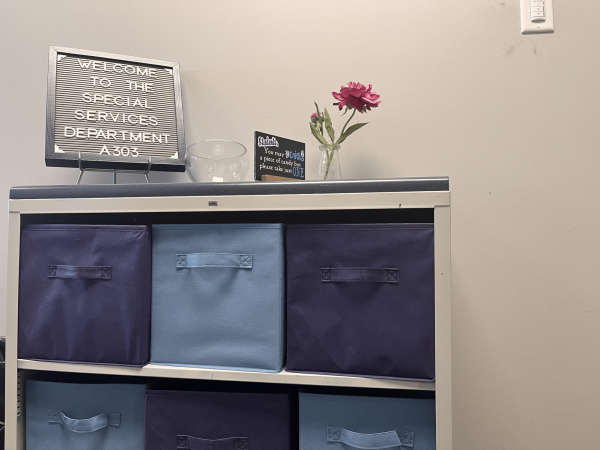
In the Downers Grove community, students with special needs either benefit from the DGS special services program or the SASED program. Funding for these services is provided through the Individuals with Disabilities Education Act, or IDEA, grant. Public schools universally receive these funds as a way to support their students.
(Evangeline Selking)
At DGS in particular, $1 million is received annually for these purposes. However, this amount is not enough to cover the needs of the district. Assistant Superintendent for Student Services Scott Wuggazer is a part of the administrative team that oversees the department’s finances.
“The District’s annual special education budget exceeds the federal allocation. Therefore, local funds are allocated to help support programming and services for students with disabilities within the District,” Wuggazer said.
These funds support the needs of students with disabilities within all of District 99, providing services such as adaptive transportation, specialized equipment, and educational resources. Beyond the students, staff salaries and benefits are also covered by this funding. In addition to this, professional development is provided for staff members to ensure premium education is delivered within the district.
These integral services are the backbone of the special education department and critically shape the environment.
While recent funding cuts have yet to impact the district directly, many do fear their implications. However, the Downers Grove community is consistent in its contributions towards the department. This allows DGS a safety net regarding its special education programs.
“Our Board of Education has always been highly supportive of our students with disabilities. Since our local budget exceeds the funds from this grant, we will adapt and continue providing the programming we believe is essential for students receiving special education services,” Wuggazer said.
Combined support from all facets allows needed programs to run in the area. For instance, Naff benefits from the SASED program, which combines nearby districts to support students with high needs.
“The home school districts have to pay for the child’s education, and so special [education] kids are expensive because outplacing them to SASED costs more than keeping them in the district,” Love said.
Because of this, if a student has minimal special needs, the school will keep them in the district rather than directing them to SASED. If a student is in SASED, however, the money that the home school districts pay to the program goes directly to paying the teachers as well as rent to the district hosting the students with special needs.
Additionally, many students with special needs require support beyond just the SASED program.
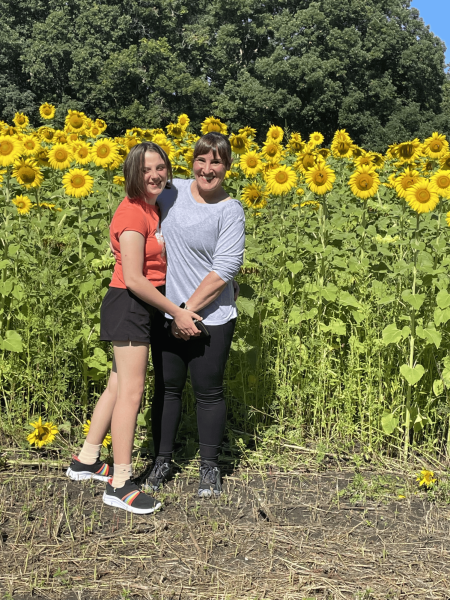
“[There are] funds allocated for making sure they can pay something like a speech pathologist … or an occupational therapist. We meet as a team and decide she needs … 45 minutes a week of speech therapy … and then, legally, she’s supposed to get [that],” Love said.
Parents’ rights to these legal requirements are protected by the U.S. Department of Education. If Love sees that the school district is not meeting her daughter’s needs, or is even mistreating her, she’s able to sue the school with direct support from the U.S. Department of Education.
However, DGS teachers themselves do their best to prioritize the needs of students. The aim of the entire department is to give every individual the best possible experience. This entails fulfilling both specific needs and general education, no matter what the federal influence looks like.
Social worker Meghan Liston has dedicated her work specifically to the Special Services department. She works exclusively to support students with particular needs.
“I have a caseload of students who have direct social work minutes on their IEP, which is an individualized education plan. So they each have goals for social-emotional needs and minutes that we service, and then we go in and we just work on different lessons and activities that help build that,” Liston said.
Liston’s commitment to the department and its efforts showcase the true dedication found within all staff members working as a part of this team. Despite possible challenges from federal funding and political leaders, staff members remain steadfast in their belief in their students, constantly pushing to provide them opportunities for success.
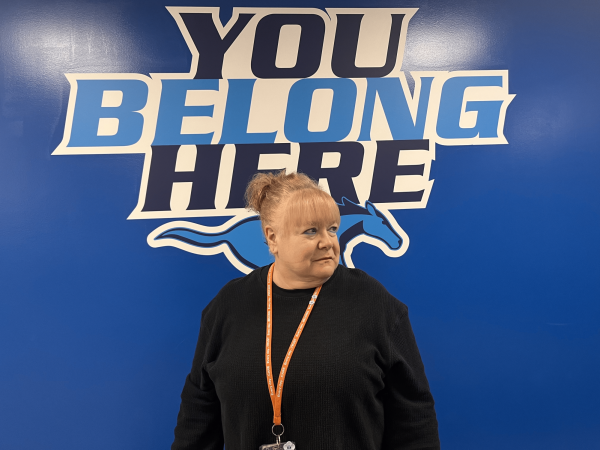
Interim Special Services Department chair Kathleen Vanderplow is a part of this committed group. She reflects on the department’s efforts despite conflict.
“We do our best to just try to bring teams together and be team players, and really try to meet the needs of all of our students in so many different ways,” Vanderplow said.
(Evangeline Selking)
This level of perseverance not only inspires within Special Services, but also across DGS’s and the community’s broader culture. Additional diversity found within the program adds a new dimension to the environment as well. Ultimately, this provides a positive attitude that is particularly influential in Liston’s eyes.
“[Special needs students] enrich the culture so much. Whether or not you happen to have special services or special education needs or not, we all just have our own profile and to be able to bring awareness and to be able to be around people who function differently than us … It just brings a really strong full circle moment,” Liston said.
A particular avenue of connection for this mentality is the D99 Hoops program. D99 Hoops is a Special Olympics basketball program that draws students from both DGS and DGN of all skill levels. The team provides opportunity for both personal growth and a chance for the Special Services department to be a part of the school community.
“[D99 Hoops] gives our students an opportunity to get involved, to play a sport they love, to be part of a team, to learn all those skills that come along with that, to have people cheering for them and encouraging them, and build their confidence. It is so much fun,” Liston said.
D99 Hoops is a key example of the importance of expanded special education programs. The community enrichment it provides betters DGS, and the surrounding area as a whole. With a possible decline in support of these sorts of programs, many would feel the effects.
This level of success is also mirrored from the students themselves. Vanderplow recalls appreciation she receives as a part of the Special Services department.
“I got an email this week from a student that graduated last year, telling me how everything is going [and] how much he appreciates everything that he learned here at DGS and the support that was provided to him,” Vanderplow said.
Special education programs provide essential support and opportunity for everyone involved. Not only do students receive an education, but the community surrounding them gains a richer experience.
Vanderplow initially felt drawn to work at DGS because she saw the effects of a successful special education program on the school’s environment. She continues to believe in the school’s spirit many years into her time here.
“This school’s awesome. I love it. I love this whole spirit,” Vanderplow said.
When she first interviewed for a position in the Special Services Department, Vanderplow remembers how she felt like DGS was the perfect fit for her.
“I walked out of here thinking, I want to work there,” Vanderplow said.
Success to this degree is what inspires such support from the community, though the insecurity of the situation still leaves many scared for the future. Beyond financial implications, the shift in support of these programs dictates a negative mindset regarding special education as a whole.
For Love, the gutting of the U.S. Department of Education has provoked an intense amount of fear for her family. As a parent, her legal rights no longer seem as tangible as they were before. In the past, the U.S. Department of Education served as a mediator between parents and schools who might not have been meeting the needs of special education students, allowing children with special needs to be supported.
Love says she’ll hear some people argue that the funding cuts have little effect on special education students. On paper, after all, Love has the same rights she did before. But now, the government doesn’t have the resources to protect those rights.
“If you’ve ever seen headlines about, like, kids with autism who are placed in … kind of like solitary confinement rooms, or, you know, the aide gets really mad and is pulling them down the hallway … those are the kind of things where, normally, you could hold them accountable,” Love said, “Now it’s just like you could make empty threats.”
And for the SASED program Naff benefits from, lapses in funding may restrict the availability of the special services available through SASED, whether that’s access to speech pathologists or even transport to the classrooms in a different district, since these resources are costly.
Aside from the dismantling of the U.S. Department of Education, Love worries how the targeting of other government programs can affect her daughter’s future. Since many adults with special needs are unable to work a job that would support their cost of living, programs like Medicare and Social Security benefits work to support their livelihood. However, under the Trump administration, Medicare has faced potential privatization and employment has been cut in the Social Security Administration.
“All of those things that would help them live a life of dignity, those are all being cut,” Love said.
Though these programs aren’t traditional ways one would think of education, they support the same needs, according to Love.
Love also notes how the funding cuts in the U.S. Department of Education signal something deeper.
“You spend money where you prioritize things. So if we’re not spending money, it indicates we’re not prioritizing certain people too,” Love said.
People with disabilities have historically been discriminated against in the US, and the support they gain from the U.S. Department of Education becomes an important way of recognizing their personhood. But when special education programs are targeted, Love believes that this sends a message to special education students and their families about their value to the rest of the country.
“The more that we don’t create space for people who are not similar … in whatever way that is like, the more we create a hostile environment for those people,” Love said.
For Love, this hostile environment becomes a part of the conversation surrounding people with disabilities and other marginalized groups.
“In the United States as far as tolerance of other people … whether that’s people who are not white, whether that’s people who are not straight, whether that’s people who are not cisgendered, or whether that’s people with disabilities, like we just have normalized that it’s okay to be critical … “It’s okay to be intolerant,” Love said.
Thus, Love sees how the dismantling of federal programs supporting special needs students points to a larger issue of intolerance, especially when the people spearheading these funding cuts seem to perpetuate this culture.
“I even think about, like, Trump’s first presidential run, where he mocked the disabled reporter. And like how that was just okay,” Love said.
At the end of the day, Love says she worries less about the financial strain and legal issues the funding cuts may bring. Instead, she fears for Naff under a government that doesn’t support her needs, in a country that seems to ignore her dignity as a human being.
“That fills the air that [Naff] lives in, and that affects everyone who’s ever going to see her, and whether or not they’re going to tolerate her [and] accept her in,” Love said.