

The trending “clean girl aesthetic” that western influencers and teenagers are pushing in 2025 has matcha lattes, morning yoga, jade bangles and boba at the forefront of Gen Z’s mind. The importance of one’s zodiac sign is often the subject of online discourse.
All of these “trends” are timeless aspects of Asian culture. Often, non-asian people criticize these cultural aspects- zodiac signs, Asian food, Asian fashion- as unappealing, or “overrated” because they are uneducated in how these items are connected to Asian culture and are unaware of how their comments may be harming this culture.
The traditional Asian drink, matcha, has been around since the Tang dynasty in China (around the 7th-10th century). It has held an important place in Chinese culture, but especially Japanese culture for centuries.

Over the past few years, matcha has seen a rise in popularity, finding its footing in Western countries. Retail sales of the tea powder increased 86% from three years ago, according to NeilsenIQ data cited by the Associated Press.
NBC News reported that this global high demand paired with limited supply has consequently resulted in a matcha shortage, where people of actual Asian heritage are unable to get the drink. This means that those of Western culture are inhibiting the ability of those of Asian culture from having access to their own products.
Former Starbucks barista, Kate Dziewinski has seen first hand how the average American company aims to market matcha. She shared how Starbucks prioritizes education about its coffee, but allows for matcha’s history to remain unexplored.
“Starbucks did not train us for where our matcha comes from. Starbucks is a coffee house that mainly sells coffee so we get taught on where our coffee beans come from and the significance of them. The only training I did about matcha was on how to make the matcha drinks,” Dziewinski said.
Beyond food and drinks, fashion trends often have deeper meanings to those of a certain culture; for example jade bangles hold importance in Chinese culture. Cognitive Market Research reported that Jade’s market size in 2021 was $667.106 Million and by the end of 2025 it will reach $1430 Million, this is about a 214% market growth.
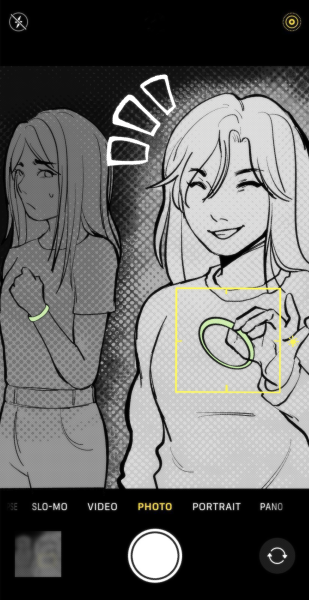
Senior Casey Patten shed light on what jade bangles mean to her family, and their Chinese culture.
“Some believe jade bangles bring longevity and health because those are the properties of jade, but it could also mean family and traditions. Like for my grandma, the women in the family would get a jade bangle when they were younger and then wear it until they’re old and then they would pass it down to the younger girls. It’s not supposed to come off ever because it’s a bracelet that’s fit to your wrist, so you put it on, there’s no clasp or anything and it just stays on,” Patten said.
She expressed the frustration she feels when people wear jade bangles or other Chinese cultural fashion without understanding the meaning. She feels that culture should be shared not stolen, and this happens through education and understanding.
Senior Danielle Cacho was born in the Philippines, and has an interesting perspective on how Asian countries play a factor in their own culture being appropriated, when they market their culture as “touristy” and misrepresent it to foreigners.
“I know that, in the Philippines and a lot of like, touristy areas, they’ll lean into the tourist trap stuff. It’s not to say that we’re at fault for other people’s taking trends from us, but because of the way that society and history has shaped everything, everything becomes a commodity. If it sells, it sells,” Cacho said.
Asian student union member Elysa Alikpala has a personal perspective on how it feels to see people who formerly criticized your culture, enjoy aspects of it.
“The same kids who bullied me for eating Asian food are now swarming to Asian places, and it’s like, are you just following the trends, or are you actually, like, actively trying to learn the culture? That’s kind of upsetting for me. It’s becoming more like a trend, instead of like, actually learning about the culture,”Alikpala said.
Alikpala also has experienced people talking about Asian products, without understanding how to pronounce these items. She explained that people will get mad at others for correcting them, and refuse to listen, even when it is coming from an Asian person who personally knows how to pronounce these products.
She also shared how she sees ignorance harming Asian culture.
“There’s a lot of people who immerse themselves in the culture, but also discriminate against the people themselves for just being them because they interpret the culture in a way that isn’t exactly how we use things to function. That’s understandable because different people function in different ways, but it’s pretty disrespectful to be using something that’s culturally significant in our culture the wrong way,” Alikpala said.
Also witnessing this harmful misinformation, Cacho feels that people should have the responsibility to not only educate themselves, but admit to mistakes, and treat other cultures with humility and respect.
“Whenever you open your mouth, you should know what you’re talking about, and, if you’re going to participate in something that you know is cultural or has cultural roots, listen to the people that that culture comes from; if you get mad that someone from that culture is saying that you’re doing it wrong or that you shouldn’t be doing it, if getting mad is your first response, why is that your first response? Why do you not want to listen? Why do you feel entitled to have what is not yours?” Cacho said.











Liam Wells • Nov 5, 2025 at 1:39 pm
rlly good article!