


Students bank on future, monopolizing financial literacy



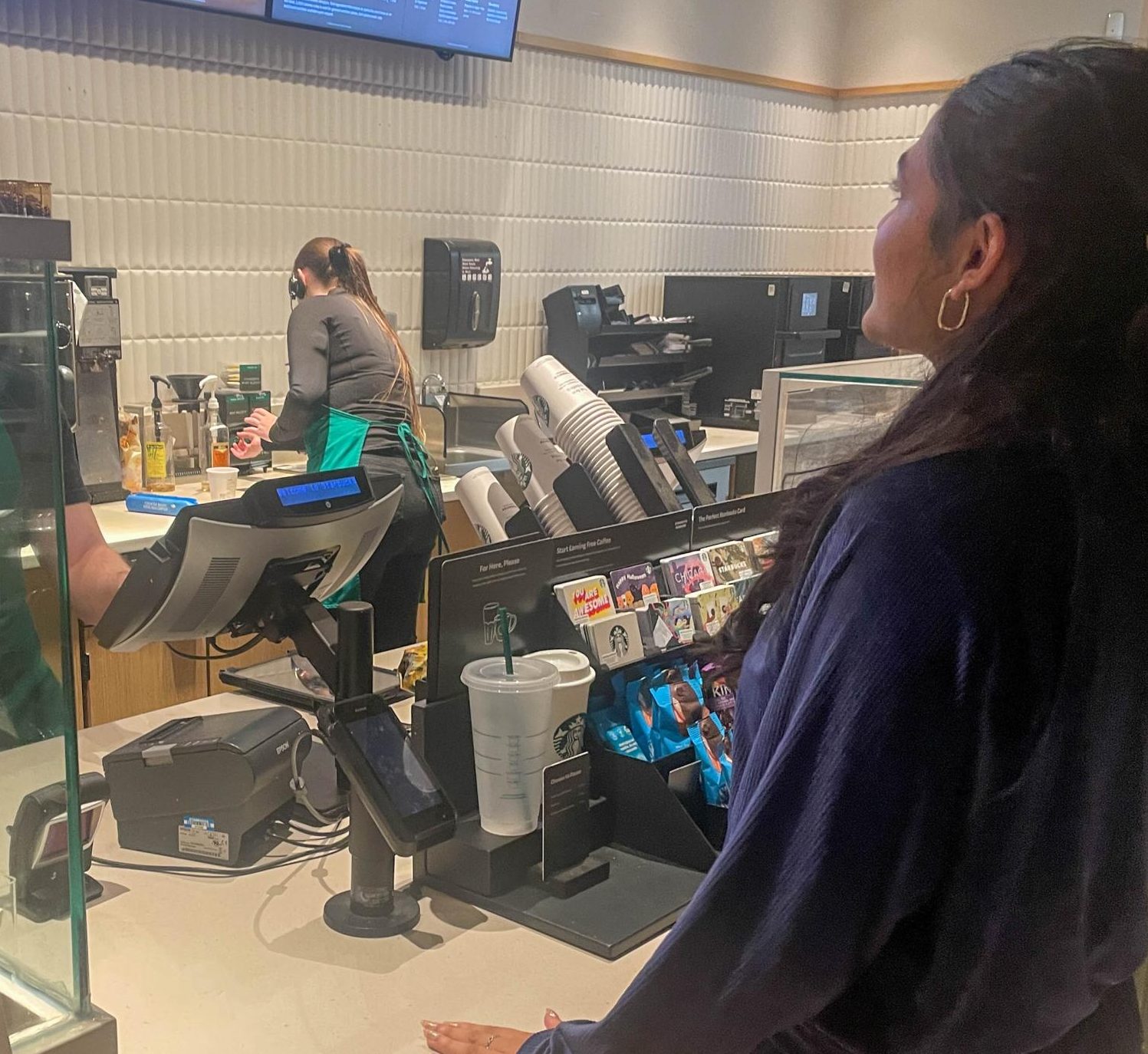
Money is one of the most prominent factors in a high school student’s life. Whether a student is going out with their friends, or just treating themselves to takeout, money follows them everywhere.
A new prospect comes into a student’s life: whether or not to get a job, and have some extra cash to spend.
Junior Ka’lynn Payne has been employed for almost all of her high school career.
“Having a job gives me something to do when I have nothing [else] to do. And you meet a lot of great people…I can pay for things a lot more now, but when I had no job, I couldn’t,” Payne said.
Payne’s financial responsibilities consist of her own phone bill.
Along with that, “[I spend my money on] a lot of clothes and a lot of food. I also pay subscriptions for music apps. It’s a lot,” Payne said.
On the other side of the spectrum, sophomore Max Prerost worked a seasonal job position, working concessions and janitorial services at Cypress Cove, but it is now out of season.
“I would get guitar stuff, clothes and food when I had passive income…[Now] I get money from doing chores,” Prerost said.
Prerost also pays for a Spotify Premium subscription, which he pays for with his given allowance.
“Without any passive income, I’ve had to sacrifice not being able to get clothes and [other] stuff,” Prerost said.
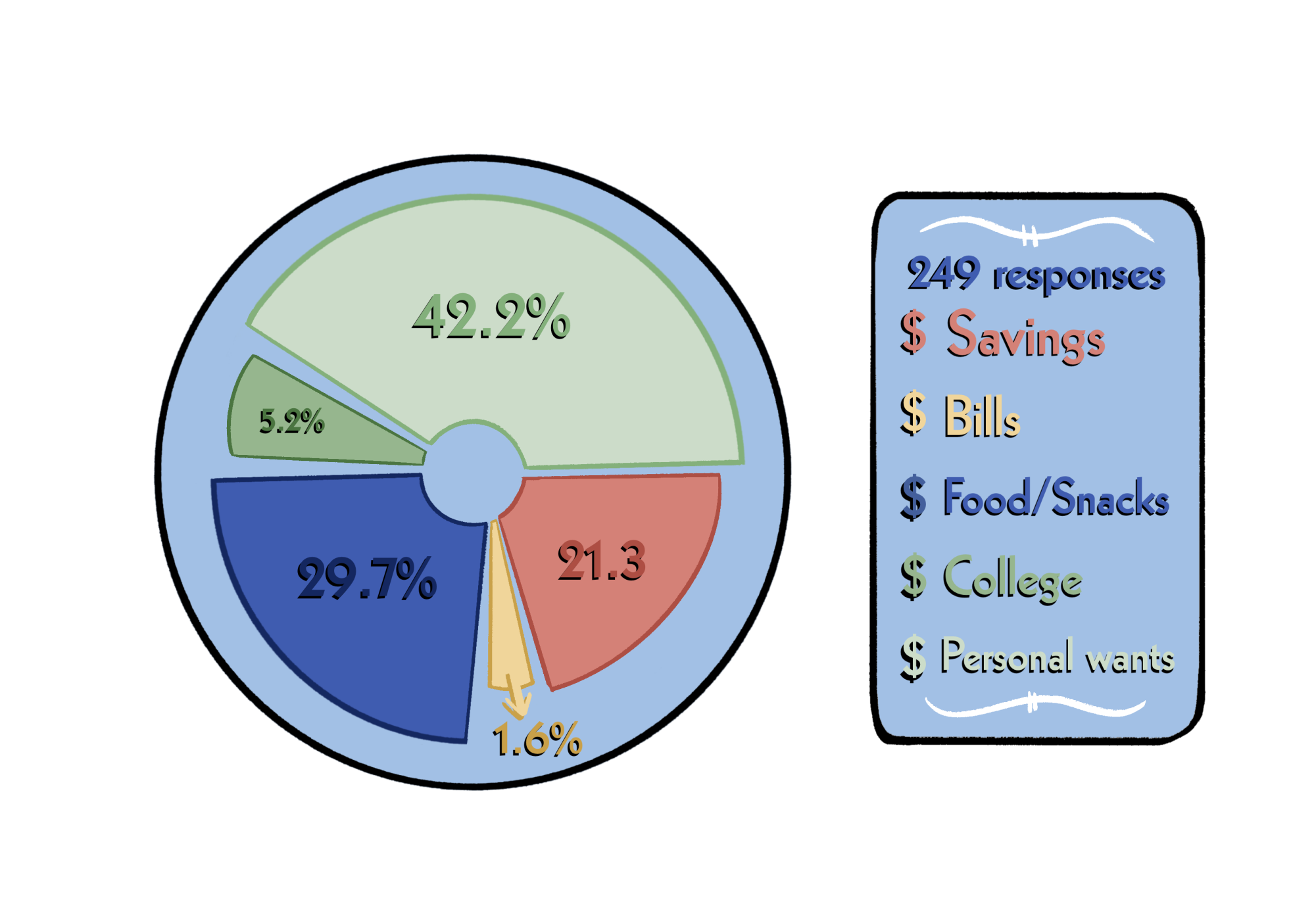
While some students spend money with short-term desires in mind, whether craving a Starbucks drink or a new hoodie, others focus on saving for future goals. Students are influenced to save or spend based on their family’s income, work experience and future aspirations.
According to the semi-annual Piper Sandler Teen survey from fall of 2025, the average American teenager spends $2,213 a year, mainly as a result of money from parents or part-time work. The survey also shows that 83% of teenagers choose to save their money. DGS students tend to follow a similar pattern, saving a portion of their money and spending the rest to make memories with friends or enjoy a nice meal.
Junior Aubrey Polasek, who worked at Cypress Cove Family Aquatic Park as a lifeguard this past summer, saves most of her money to pay for college and have a safety net later in life. However, Polasek also occasionally enjoys spending her earnings on food, clothing or going out with friends.
“I spend around 20-30% of my money, maybe more, and save the rest…I enjoy spending time with my friends, and I’m always ready for a sweet treat,” Polasek said.
Junior Jaycee Fortune has a similar mindset, choosing to save a quarter of her income.
“I think it’s okay to spend most of your money since you’re growing up, so you can splurge a bit. However, I think you should save some of your money because you might need it if something goes wrong, or you need something for a job or project. Also, some kids need to pay for college, so it’s good to have money saved up,” Fortune said.
Fortune has a lot of experience babysitting and has worked in four different positions at Cypress Cove. She spends most of her money on gas and going out to dinner.
“A lot of the time, when I go out with friends, we get food and I drive them. I also use a lot of gas driving to school. I choose to spend my money on this because I’m a teenager, and I want to spend money to have fun sometimes,” Fortune said.

“120+ Funny Venmo Captions to Make Your Friends Laugh” or “Craziest Apple Pay Pranks.” Today, articles like these are common, perhaps an indicator in the growing popularity of digital payment services. After all, in 2024, there were 744 million Apple Pay users alone, so this rise in transactions may hint at the increasing usefulness of digital pay services.
Senior Lyia Zhang describes how Apple Pay streamlines her purchasing experience.
“It’s easier to just bring your phone and then pay…instead of [bringing] a bag or like a wallet,” Zhang said.
Aside from providing a more convenient way to shop, digital pay apps can also offer opportunities for positive change. Senior Akyra Moaton describes how those struggling with money might take advantage of Venmo or Zelle’s services to raise money for their bills or other needs.
“[They] can just, like, put their Venmo or their Zelle in their bio on a social media page and people are able to donate, so I feel like it’s had a positive impact in that way,” Moaton said.
With cash, users would not be able to donate as easily; digital pay services appeal to users’ values for convenience and efficiency.
At the same time, services like Apple Pay may present drawbacks for some users. Zhang describes how cashless transactions have changed the way she thinks about her purchases.
“You can’t physically feel your money until you open up your bank account and you see that you spent more than you thought you did,” Zhang said.
For people who are used to digital transactions, the intangibility of online money might mean users need to be more cautious about their spending habits. English teacher Michelle Meuer shares advice she has given to her children on this topic.
“Be discerning about what [you’re] choosing to buy…do I really need this, or can I thrift this?” Meuer said. “Just always [have] that savings so that when something comes up, because something always comes up, [you] have that money.”
Apple Pay, Venmo, and Zelle are here to stay. Now, it’s a question of how young adults will continue to find new ways to use them.

Saving money can be a daunting task which many high school students put off.
Students can put it off for many reasons, such as thinking they don’t have enough money or impulsively buying anything they see. In reality, it doesn’t take holding all your money away to become a grade-A saver.
The key to saving money is starting as soon as possible. When teenagers begin saving in high school, they can put their money away in a savings account and accumulate interest on the money they put in. Over time, they’ll have a lot more money than they started out with.
Opening a savings account doesn’t have to be hard. Local banks have many different types of savings accounts that can help you build up your interest, such as high-yield savings accounts. Some banks even have special types of savings accounts for high school students where they can get additional help along their savings journey.
Personal economics teacher Derek Hoovel talks about the importance of starting to save young.
“The thing I tell my students is that the biggest thing you have on your side is time. There’s a thing called compound interest [where] even starting now with just small amounts, over time that interest grows and grows and grows,” Hoovel said.
Some students have already implemented ways to save in their own lives. It doesn’t have to be something extreme, just a place to invest small amounts of money to let it build and accumulate interest. When students come back years later to these accounts, their hard work will pay off.
Sophomore Addy Tjarks shares how she saves her money.
“I’m very lucky. My grandparents have investment accounts for me, and so the money I make myself, I get to keep,” Tjarks said.
With time and a little bit of money, savings can grow exponentially; the key is starting now. If students have patience and restraint in how they use their money, they’ll be rewarded with much more than they put in. The only thing they have to do now is start a savings account and put that money away.
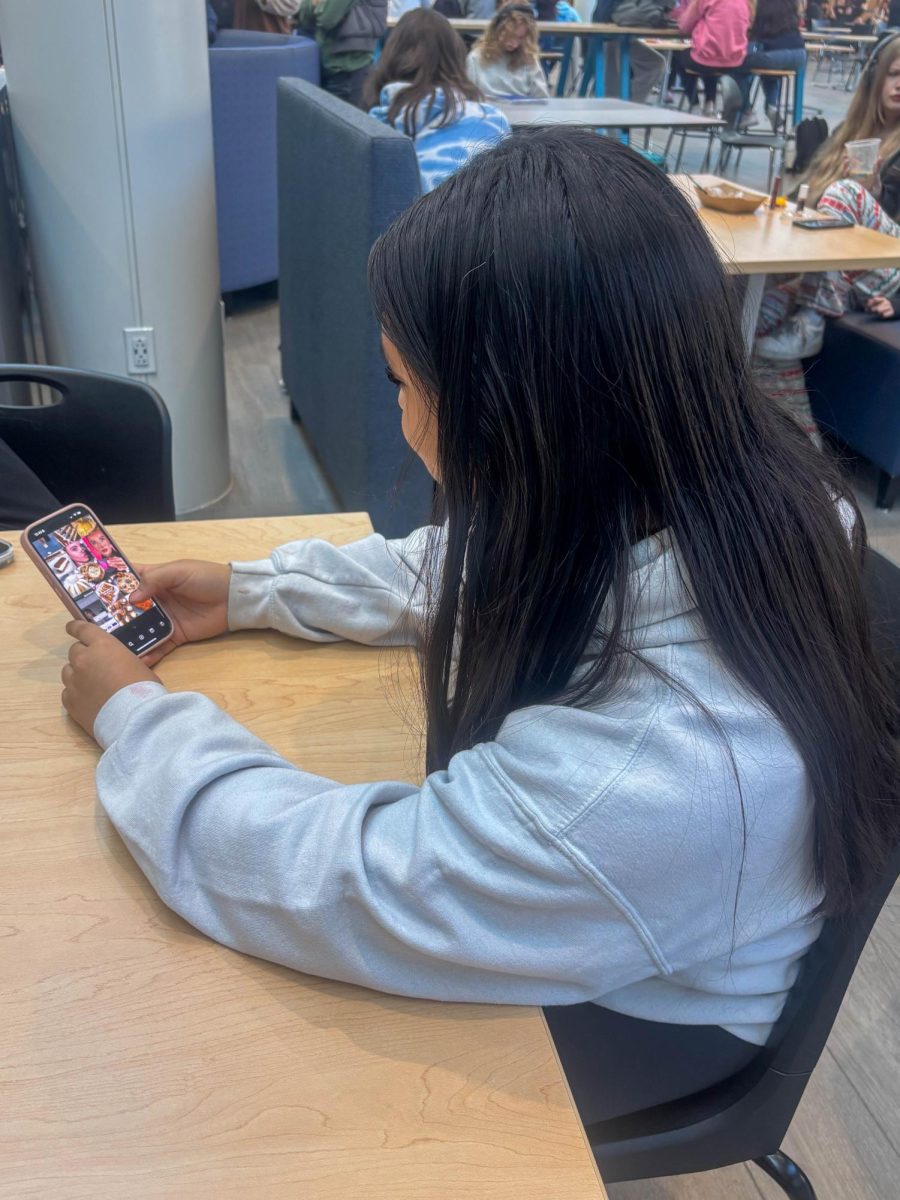
Every day, teenagers are influenced by messages on social media about their money. Content from popular digital platforms also seems to revolve around the concept of spending. Whether it’s new trends, hauls or financial advice, the media always appears to have a say.
Junior Ingrid Baker shares her thoughts on the media’s message about money.
“Social media has normalized overconsumption, encouraging people to spend enormous amounts of money on non-essential items and buy products solely for the brand name,” Baker said.
Many people are susceptible to buying new products on apps like TikTok and Instagram. Especially with new shopping features on these platforms, many feel pressured to spend their money on the newest trends.
“I’m very influenced by the products that I see on TikTok, for example, I always am very tempted to buy clothes that I like that I see other people wearing on TikTok,” Baker said.
Seeing people with new products online can make other teens feel left out or uncool. Influencers also play a big part in many teenagers’ spending problems online.
Sophomore Claire Zimmerman explains her experience with money messages online.
“Watching videos of people online showing off new things or doing hauls definitely influences me to buy things because a lot of influencers are trying to promote a product. It makes me feel like I need to have that product,” Zimmerman said.
Many people online share advice about spending money and how to use it properly. However, a majority of them do not have much credibility on the subject. Some content creators online influence people to use their money irresponsibly, not even on purpose.
“Seeing influencers who have all the trendy products makes me want to get these products as well: it leads me to bad money spending habits,” Baker said.
Furthermore, social media can have a positive impact on teens’ spending as well. Certain platforms offer accounts that encourage saving money and using it wisely. There are multiple sides to the influence of spending on social media.
“It can be used to inform us about bad money spending habits instead of just encouraging us of these bad habits,” Baker said.