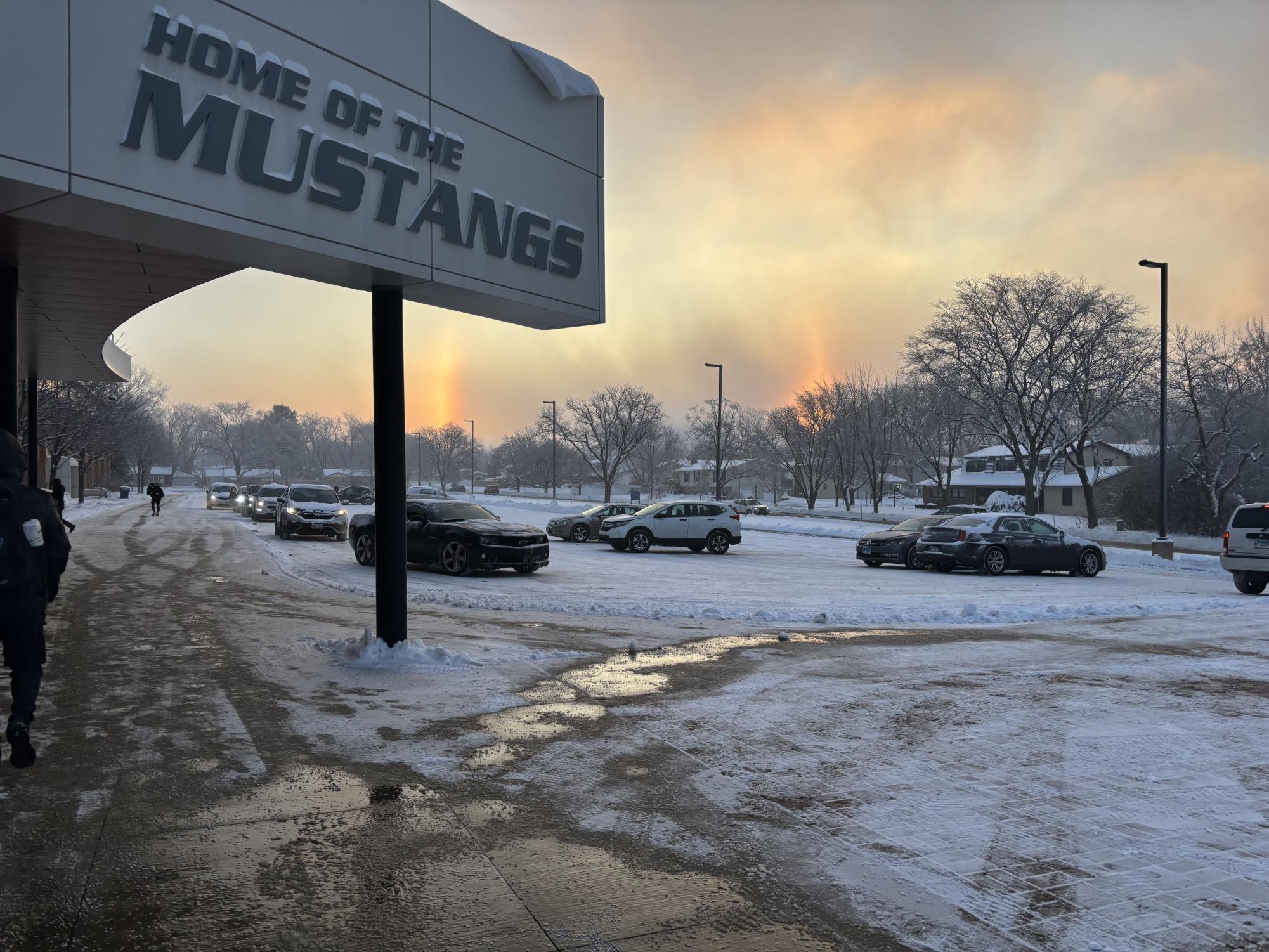


Record breaking heatwaves, droughts, fires and floods led to destruction around the globe in 2025. These trends are only increasing, as 2026 is projected to be among the top four hottest years in history.
According to the United Nations University, there is a high likelihood of the global average temperature temporarily surpassing the threshold of 1.5 degrees celsius above pre-industrial levels. This event would mark the beginning of more severe, long term climate impacts. Consequences may include nearly 99% of coral reef loss, frequent heatwaves and droughts, accelerated sea level rise and the potential collapse of vital ocean currents.
Many people view Chicago as a climate change “safe haven” due to the city’s inland location, which offers protection from wildfires or hurricanes. However, the Chicago area is not as removed from climate change effects as some people may believe.
Earth and space and environmental science teacher Kelsey Gibney spoke about some of the changes Chicago is already facing and will likely continue to see in the future.
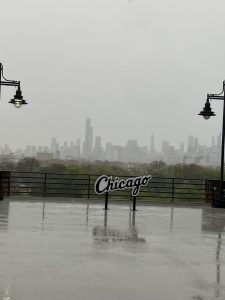
“We don’t say global warming anymore, we say climate change, because along with that average warming comes changes in things like our precipitation patterns and storms. So I think the places that Chicago may find trouble with is either bigger storm systems, or droughts or massive amounts of rain,” Gibney said
Chicago has also experienced extreme heat and cold the past few years, with Fox 32 Chicago revealing that the summer of 2025 ranked among Chicago’s top 20% of hottest summers. This winter has brought additional changes in weather following a warm fall season, from increased precipitation, extreme temperature variation and low lake levels.
According to the National Weather Service, Chicago temperatures reached as low as -11 degrees Fahrenheit, with windchill between -30 to -40 degrees Fahrenheit, on Jan. 23, 2026 during an Arctic air mass surge. Many schools, including DGS, closed on that day.
However, less than a month later, Chicago also shattered an 150 year old record for warmest Feb. 16 when temperatures reached a high of 65 degrees Fahrenheit during a heatwave. These temperatures were around 100 degrees higher than those observed in late January.
Serious heatwaves are not new to Chicago, as graduate student at the University of Illinois Chicago, Maren Gingerich, who worked for the Chicago Department of Environment this past summer, recalled.
“In 1995, there was a very famous heat wave that was unfortunately very devastating for Chicago, with over 700 people passing away,” Gingerich said.
Biology and chemistry teacher Jamie Workman described the science behind heatwaves in cities.
“Every city, because of the pavement and the black rooftops, and the sun load on city streets and the tops of buildings, creates a tremendous amount of energy transformation to heat. So urban centers are often referred to as heat islands,” Workman said.
Gibney and Workman are also aware of the food shortages that may continue to arise with high temperatures.
“If it continues to get hotter, our farms are gonna turn into deserts. And if we don’t have farms, we don’t have food,” Workman said.

(Aubrey Polasek)
While Gibney believes Chicago will be able to grow more crops than other areas as the repercussions of climate change continue to alter our world, she is concerned with how recent increased temperatures will affect the Great Lakes.
“As the temperature of the Great Lakes starts to change, will that be outside of the range of tolerance for fish in the Great Lakes?” Gibney said.
Climate change also increases precipitation due to a warmer atmosphere holding more water vapor.
According to Book Club Chicago, Chicago experienced its greatest amount of snow at the start of the winter season since 1978, with 17.1 inches of snow recorded at Chicago O’Hare airport by Dec. 7, 2025. Furthermore, the National Weather Service reported that Jan. 8, 2026 is now Chicago’s third rainiest January day on record, with 1.92 inches of rain.
Both Workman and Gingerich observed the severe flooding that results from increased rainfall, damaging homes and overwhelming sewage systems. Sewer overflows can also result in raw sewage entering the Chicago River and Lake Michigan, threatening the contamination of drinking water.
Gingerich explained some infrastructure choices that are commonly used to help prevent serious flooding during storms.
“Both with the traditional gray infrastructure, the tunnel and reservoir plan that’s basically expanding the capacity to manage large volumes of storm water without flooding streets and basements. But also green infrastructure solutions, like planting more trees and rain gardens and things of that nature,” Gingerich said.
Chicago has been taking action in recent years to combat climate change. They have a Green Infrastructure Strategy to manage stormwater, a Shoreline Advisory Board to conserve Chicago’s lakefront and they are working with the Defusing Disaster group to protect public health and build neighborhood resilience. They aim to reduce greenhouse gas emissions by 80%-85% by 2050.
Chicago has also officially reached a milestone of using renewable energy for all municipal buildings, a plan that was announced in 2017.
However, there is also the task of addressing vulnerable communities, who are often more affected by climate change but have not always been equally acknowledged throughout history.
“People who will be most affected are the people that are already in marginalized communities or low income areas, just because of where they are in the world. And it may be harder to address because it’s not affecting people who have the power or resources to do something about it,” Gibney said.
Gingerich stressed the importance of supporting these areas by employing their perspectives to work together to reach environmental solutions.
“I think it’s really important to concentrate those efforts on the most impacted communities first, especially on the west and south sides of Chicago. To do that in collaboration with the communities that live there and really center the voices of the people who have lived in those neighborhoods and know more closely the issues they’re facing,” Gingerich said.
Near Downers Grove, organizations like SCARCE (School & Community Assistance for Recycling, Composting, and Education) and the Greener Grove are also trying to counter climate change. Both groups focus on environmental education, advocating for local sustainable policies and promoting conservation. These organizations also provide opportunities for student involvement.
Biology and environmental sustainability teacher Christopher Gales has experience working with the Greener Grove.
“They have a monthly meeting where they learn about things like composting, water use reduction, native planting and birding, amongst other things. In partnership with Greener Grove and the Village of Downers Grove, I hosted a sustainability event in October here at DGS called Sustainapalooza,” Gales said.
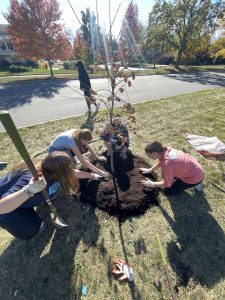
Gales provided a variety of outlets for students interested in learning more about climate change. He believes that students should look into the disparity of climate change impacts to see how different communities are affected.
“Other ways that DGS students can make themselves more aware of climate change issues is by taking elective classes like Environmental Sustainability or AP Environmental Science that focus on important environmental science issues. Students can also follow a variety of social media sites that focus on climate change news,” Gales said.
While DGS does utilize solar panels, Gales, Workman and Gibney are unaware of current plans the school has to reduce carbon emissions. All three teachers have ideas for initiatives the school should consider taking to reduce their carbon footprint.
Gibney emphasized the importance of humans finding alternative energy sources, especially as our current sources, fossil fuels, will eventually run out in the future. Gibney believes the school should pay more attention to energy usage, beyond just the administrative level, to focus on student energy use as well.
Workman argued that the school would financially benefit from covering the entire roof with solar panels, rather than a small section.
“If we had panels on the roof, and then we could have battery stored systems for the electricity, we could then sell that electricity, and it’s free other than initial setup costs … or it would shade our building. We would save cooling costs,” Workman said.
He also emphasized the benefits that would result from installing additional charging stations for electric vehicles.
“I think one of the reasons people still rely on combustion engines is because there aren’t convenient charging stations. Can you imagine if every church, if every school, if every township’s office…. if they all had charging stations, the school could make money selling electricity,” Workman said.
Gales believes the school should look towards alternative materials in our food service, decreasing our reliance on plastic.
“I would like to see a reduction in single use plastic used in our food service. The amount of plastic waste is concerning. This is connected to the climate change issue because plastics come from fossil fuels and their production is energy intensive and produces lots of greenhouse gases,” Gales said.
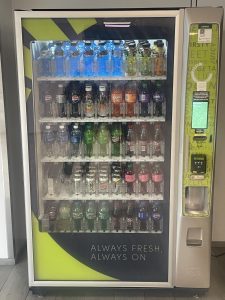
Gales further described the impacts plastic can have on human health and the environment.
“There is a terrible plastic pollution problem facing the world. We are learning that plastics do not biodegrade, but rather break down into microplastics which persist in the environment. Studies suggest that a typical person ingests or inhales up to five grams of microplastic every week,” Gales said.
However, Gales is also aware of the financial difficulties that may come with the school taking on some of these environmental initiatives.
“A large public school has an obligation to spend money wisely since it is funded through tax dollars. Large scale changes would require large monetary investments. This makes some of the above solutions challenging,” Gales said.
Gingerich is concerned with the lack of national and global attention towards climate change.
“We really need not just local investment in this, but national and global investment. Unfortunately, especially the federal picture right now, is not really prioritizing that. So without properly addressing that, there’s going to be broader issues of many more climate refugees, many more people displaced by climate change,” Gingerich said.
Gales has a similar mindset regarding the federal government’s climate policies.
“The United States withdrew from the Paris Climate Accord in January of 2025, becoming one of only a handful of countries in the world to abandon important commitments targeting the reduction of carbon emissions. If climate change is an issue that people care about, they need to elect governments that will take action,” Gales said.
Workman expressed his most prominent worries if climate change continues to progress in the same direction.
“If we can’t grow our food, and if we can’t get water where people are, people are gonna have to move to where the water is…..This is what wars are fought over. Resources, food, land….oil and water,” Workman said.
While schools and governments have the capacity to make changes in the midst of new environmental degradation, individuals also have the ability to take action to combat climate change.
“[You can do] anything from taking public transit more and biking more rather than using your own personal vehicle, or lowering meat consumption, or supporting broader policy changes that lower greenhouse gas emissions,” Gingerich said.
Gregerich highlighted the necessity for cooperation in order to create positive change.
“It’s an all hands on deck kind of situation,” Gingerich said.
Gibney shares a similar view, acknowledging that while the severity of climate change effects may differ from place to place, global warming affects everyone.
“We’re not necessarily the ones that are gonna see the biggest impacts. And so we have to think of it as a global issue, and not a localized one,” Gibney said.