
Since the beginning of 2025, Americans have seen many unusual changes from the public-facing front of the executive branch.
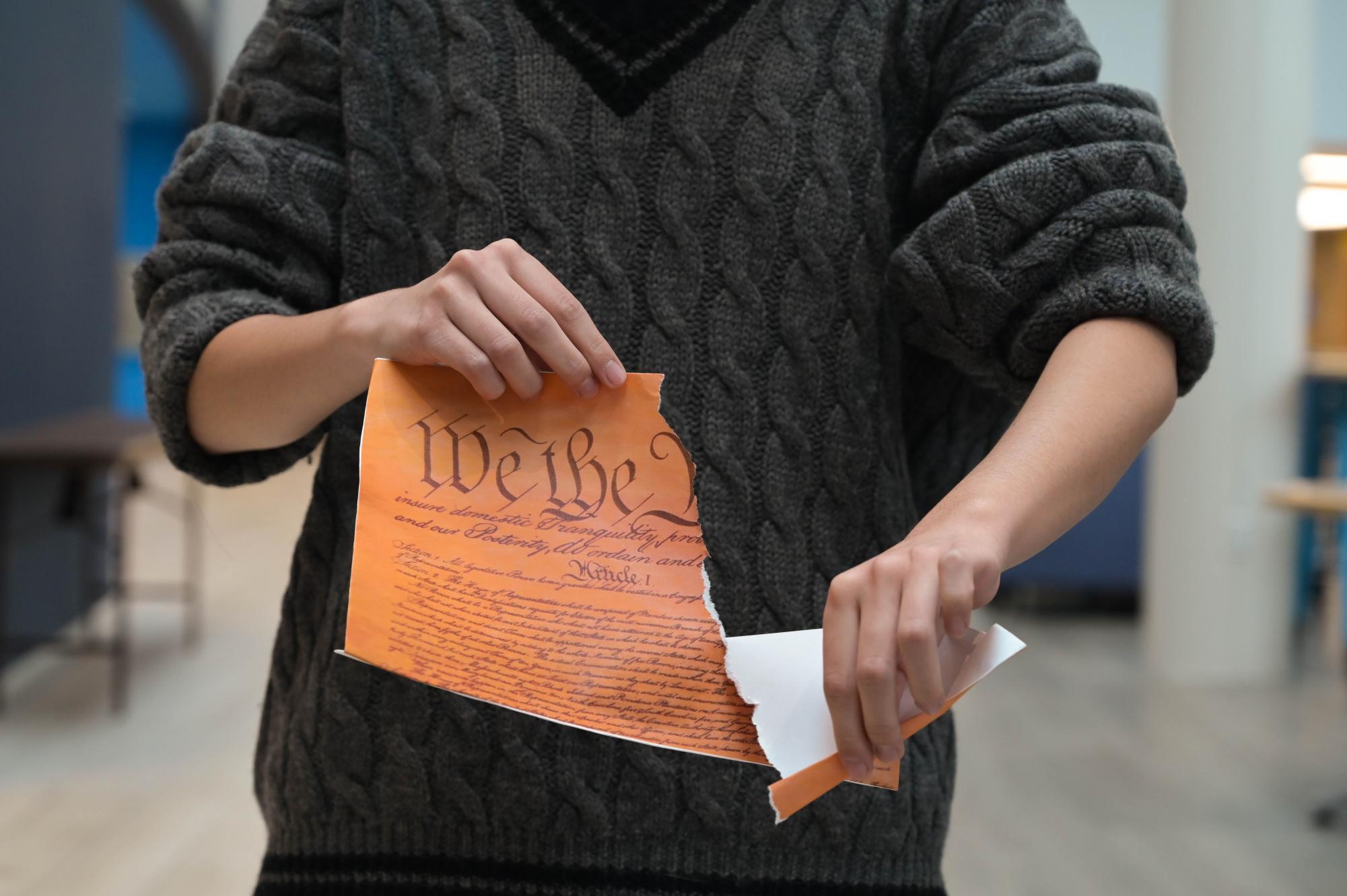
Thousands of government webpages combined from the Center for Disease Control and Prevention, the Food and Drug Administration and other websites have been removed. Parts of the Constitution detailing the limits of the power of the executive branch were briefly removed from a Library of Congress website in early August. Even webpages that remain accessible lack reference to ideas such as “diversity” and “climate change.”
For people like senior Zoya Siddiqui, this change is unexpected at best, but harmful at most.
“In a time where social media and the internet is so widely accessible, it is really necessary to have important web pages of legislation, rules or even information and research to help keep the public informed,” Siddiqui said.
Siddiqui uses government websites to stay up-to-date with issues ranging from public policy to health. Although many may not realize it, using government webpages like this is a crucial way many Americans interact with the government.
AP US Government teacher Laura Rodey believes that many people immediately associate the executive branch with the current administration, when in actuality, the functioning of the government is not necessarily tied to the sitting president.
“The executive branch is huge. It is millions and millions of people. And they all work for different agencies … We have interactions with [the government] every day, whether we go to the post office or whether we go to an airport and get searched by the TSA,” Rodey said.
However, with the adjustment of certain government webpages, Rodey believes that politics are seeping further into Americans’ everyday lives.
“During the government shutdown, the head of the TSA … they had at some airports … videos, where it was like … if your lines are slow, it’s because of the Democrats and their unwillingness to end the government shutdown,” Rodey said.
Messages like these also appeared on government websites for the Department of Housing and Urban Development, Department of Justice, and Center for Disease Control, among others.
“You don’t expect to get all these political messages in what people usually think of as a non-political context,” Rodey said.
This type of messaging is a shift, and according to Rodey, it’s a shift that Americans need to reflect on.
“What do we want our role of government to be? Is it just natural that politics are going to be infused in everything? Is that healthy? I believe that’s for the readers to think about,” Rodey said.