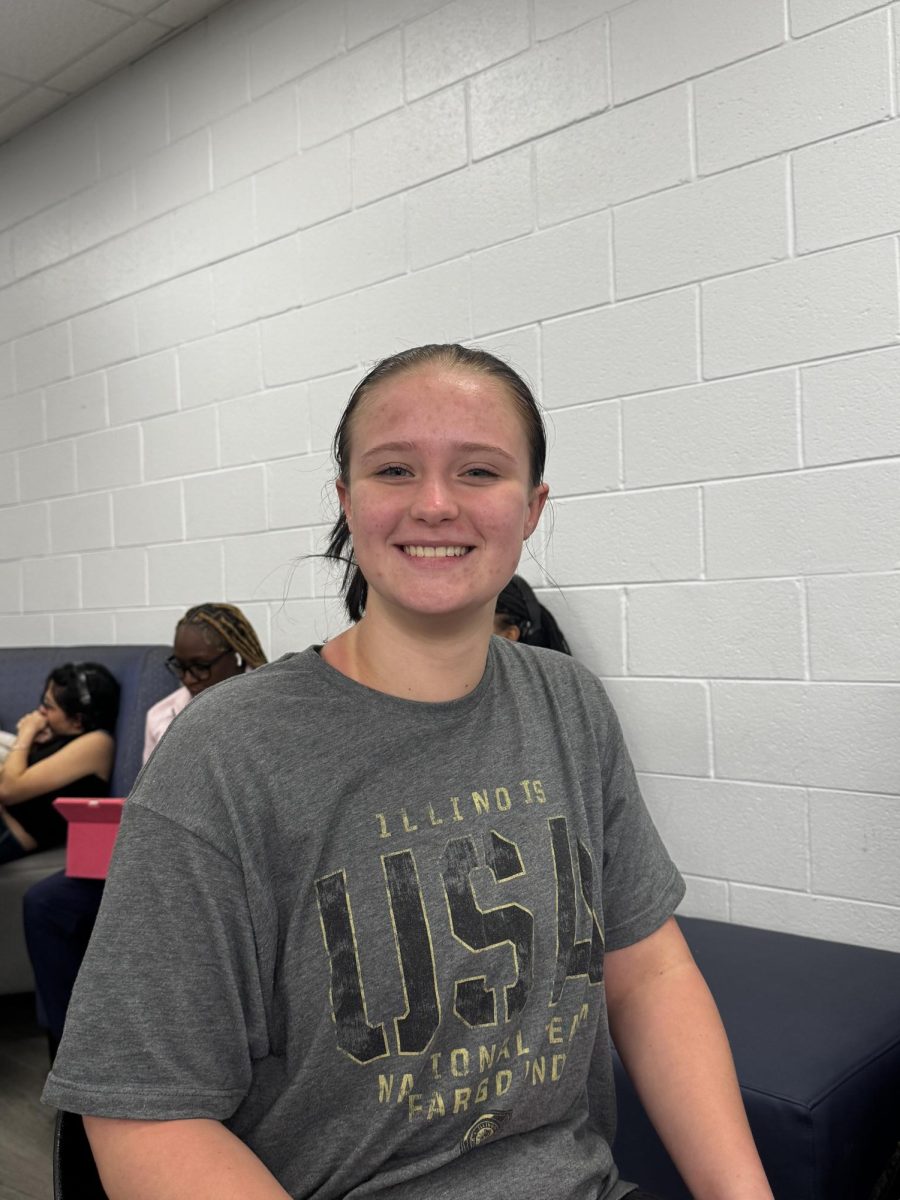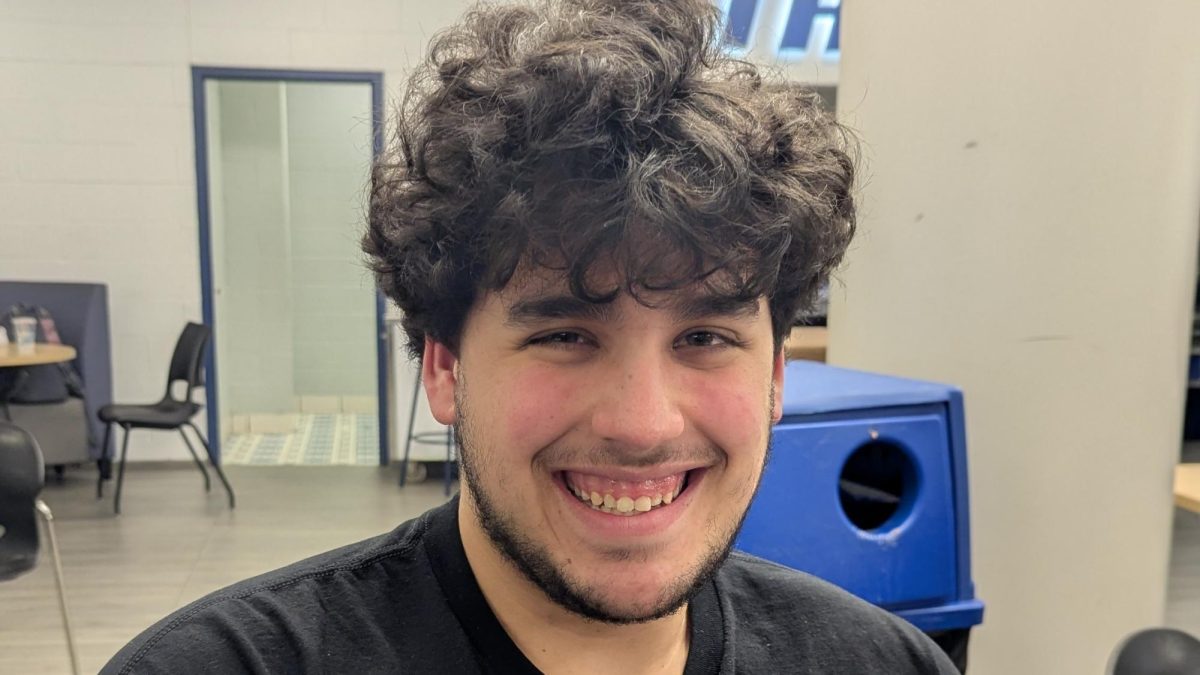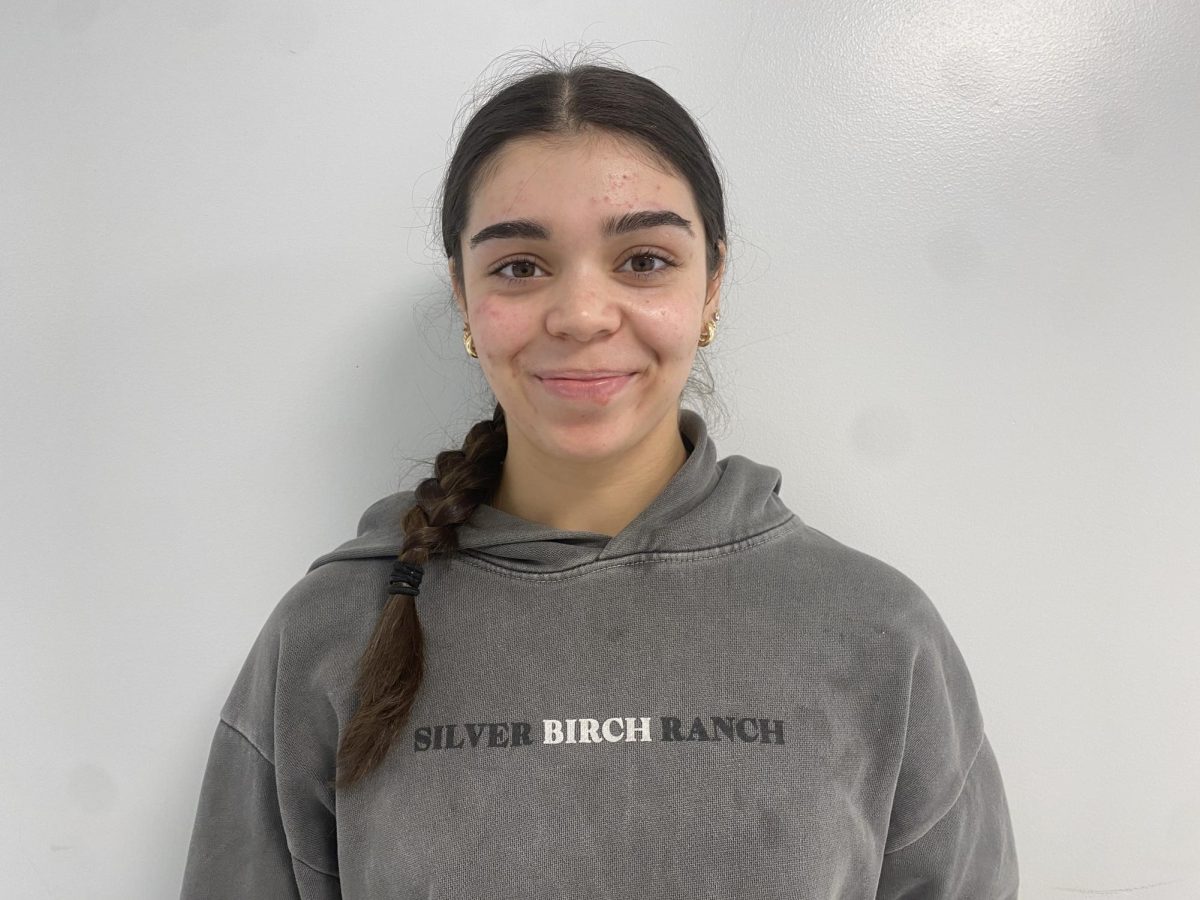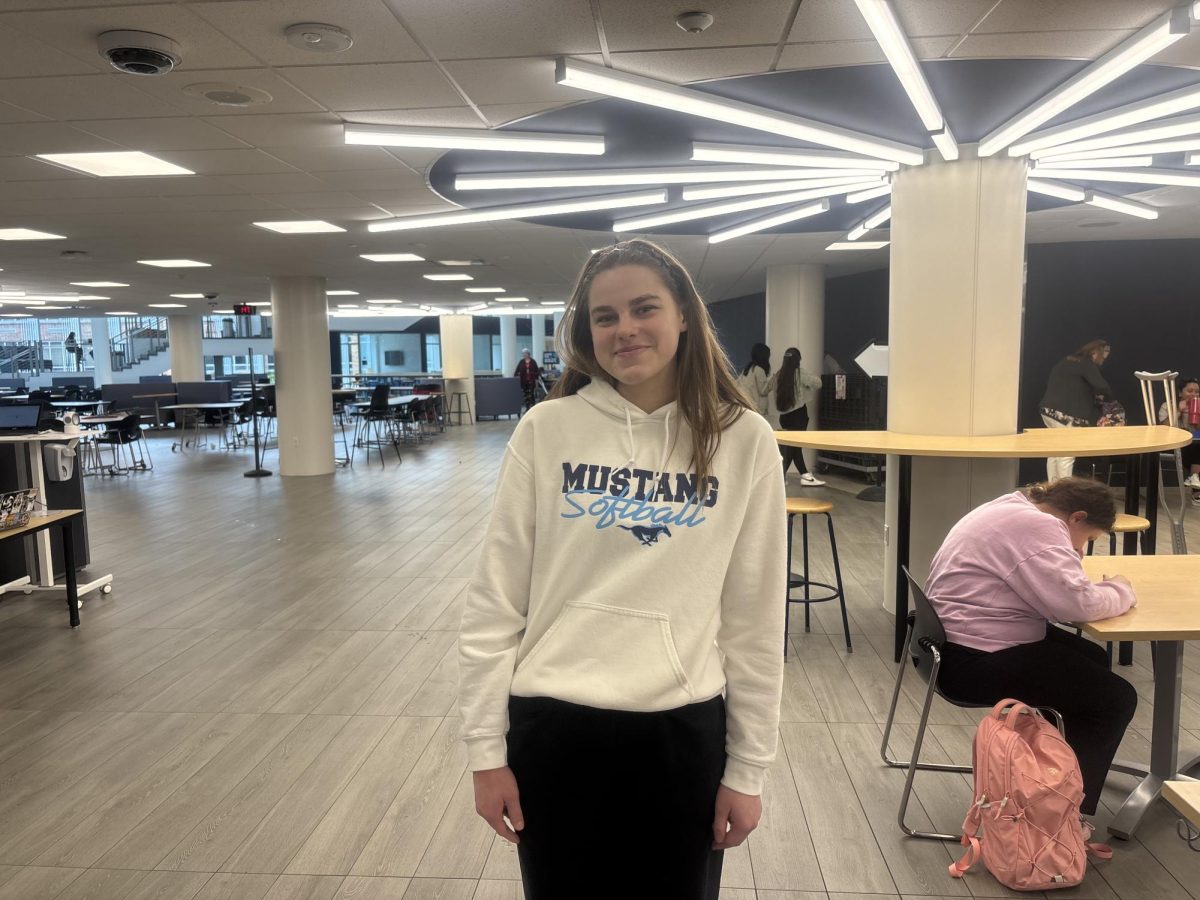

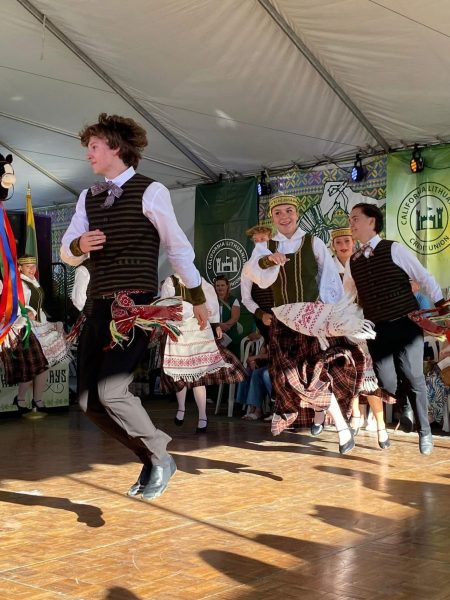
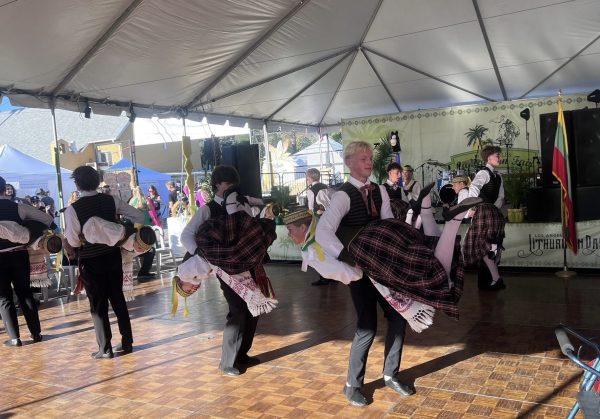
Every movement is a quick motion, whether it’s a jump, lift or kick; Lithuanian folk dance moves fast and with purpose. Working hand-in-hand, dancers display their skills for large venues in and out of the Chicago-land area. For Lithuanian dancers at DGS, dance is a way for them to remain close to their culture.
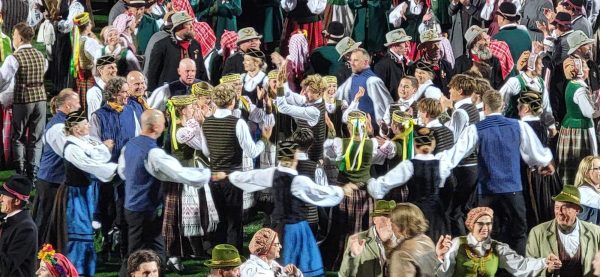
Lithuanian dance is characterized by its symmetry; whether it’s the steps, moves or music, dancers move in symmetrical patterns. Oftentimes, an equal number of dancers appear on the stage or collect in a circle to dance.
Director of the XVII Lithuanian Folk Dance Festival of North America Giedrè Knieža works closely with the Lithuanian folk dance group “Suktinis.” The group was established in 2005, and Knieža was one of its first dancers before becoming a director in 2009.
“All of the dancers are of Lithuanian heritage. We teach folk dance in Lithuanian and use pretty complex terminology, since every step has its [own] name. Currently, we have 6 groups, [which are] categorized by age. The [program] that [your DGS] students are in is one of the most fun since they perform and travel pretty often,” Knieža said.
According to the XVII Lithuanian Folk Dance Festival of North America, the cultural importance of Lithuanian dance began during World War II, when many Lithuanians were forced to flee Europe.
Folk dance and songs helped Lithuanians stay connected to their culture, even when separated from their homeland by the Iron Curtain; a political barrier that once divided Soviet controlled Eastern Europe and Western Europe. Lithuania was reestablished as a state after Soviet rule in 1990.
Junior Dovydas Statulevičius dances with Suktinis and sees the value in practicing this type of folk dance.
“When I first joined, I honestly didn’t like it and told my parents I didn’t want to continue. But then a new kid joined who also didn’t know how to dance, and that made me want to try again. I made friends, started bonding with everyone and now I never miss a practice,” Statulevičius said.
Senior Edvinas Ziogas initially joined the group because a girl needed a dance partner; However, Ziogas continues with Suktinis because he enjoys the relationships he’s made along the way.
“I’ve made so many friends from that group. We all talk together, we all hang out and [I] just like the activities and things we do, like traveling and getting to perform on big stages,” Ziogas said.
Statulevičius has also made many memories with his fellow dancers and friends.
“Our group gets along incredibly well, especially after this past summer. We spent a lot of time together—going to Chicago, having dinners and doing all kinds of activities—which brought us really close. At this point, we feel more like a family,” Statulevičius said.
Junior Julia Gabrenaite also holds folk dance close to her heart. She has been dancing since she was five years old, and she loves the story and energy that Lithuanian folk dance holds.
“One of my favorites [is] malūnas, which is like a windmill. It was for the Lithuanian folk festival, where we did the dance, and in the end, we made shapes with it and little windmills, or what looks like a windmill. It was in Lithuania; It was intense, but it was really fun,” Gabrenaite said.
Statulevičius shares Gabrenatie’s sentiment with their love for energetic and lively dances.
“One of my favorite dances is ‘Kupon Einam.’ It was the first dance I learned, and it has a lot of fun moves and a great variety of steps. Most of our dances are done with a partner, and this one is especially fun because there’s so much spinning and switching. We put a lot of emotion into our dances, and this one always makes us smile and have the most fun,” Statulevičius said.
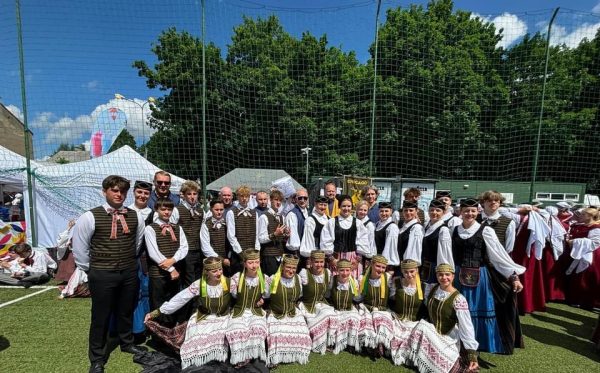
Both Gabrenaite and Statulevičius have worked on a dance named Čiūžela, where they impersonate a horse. They also prepare and perform other dances that represent animals and stories.
“Even though I’m thousands of miles away from the country I grew up in, dancing makes me feel like a part of it is still right here with me. Many of our dances represent animals, and one of our newest ones represents a horse, which is really cool to perform,” Statulevičius said.
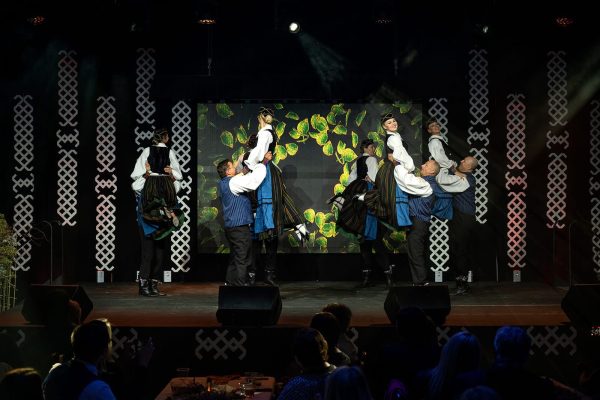
The dances focus more on footwork than arm, body or head movements. While over 30 different steps exist, no more than one or two steps are usually performed in a single dance. Lithuanian folk dance contains fast, energetic movements alongside a nod to deeper meanings.
“[Lithuanian dance] has a lot of symbolism and representation. Every dance tells a story and our costume details tell what region a person is from, as well as by the headpiece – you can tell if a girl is single or married,” Knieža said.
Suktinis also holds performances in Lithuania, Chicago and Baltimore, allowing dancers to showcase their skills to Lithuanians and others interested in their dance.
“A year ago, we went to a huge dance festival in Lithuania, where 9000 dancers were performing at the same time. Back in spring, we went to a dance festival in Baltimore, and just a month ago, we came back from Los Angeles. All of the dancers became really close friends; I look at them as my own kids,” Knieža said.
More than anything, DGS Lithuanian dancers have found that their dance is the catalyst for keeping them closer to their culture.
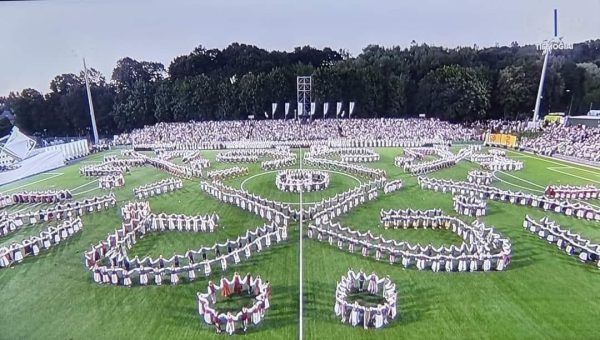
“I would definitely say it has really brought me closer to my culture because me doing Lithuanian folk dance, I get to keep my culture alive by doing the dance itself, and it’s really special. I love it,” Gabrenaite said.
Ziogas remains a Lithuanian folk dancer because of the friends he’s made, the connection he’s built with his culture and the opportunity to demonstrate his skill.
“It definitely has brought me closer [to my culture] because just last year we danced in the biggest event there was. It was like my first big event while being there for like seven or eight months or so. That was really just a big opportunity to show ourselves, and especially myself too and who I am,” Ziogas.
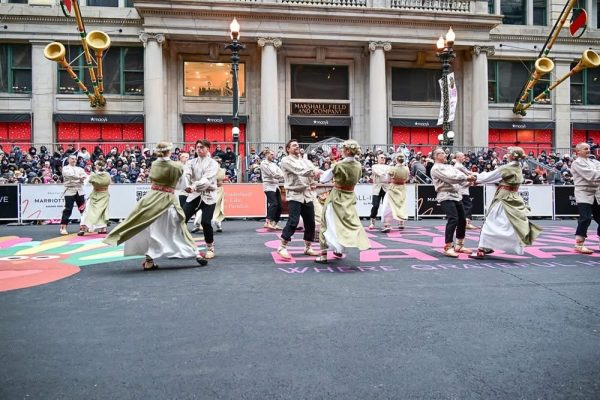
On July 10-12, 2026, the XVII Lithuanian Folk Dance Festival of North America will be held with 2500 dancers performing. It is the largest Lithuanian reunion outside of Lithuania, and it will take place at the McCormick Place and the Wintrust Arena.
“Folk dance is very deep in our roots, and our festivals are induced into [the] UNESCO program. We perform at most of the Lithuanian community events here in the Chicago area; our group has been performing at Chicago’s Thanksgiving Day parade as well as the Chicago Bulls [games for] three years in a row. We are really proud of our heritage,” Knieža said.