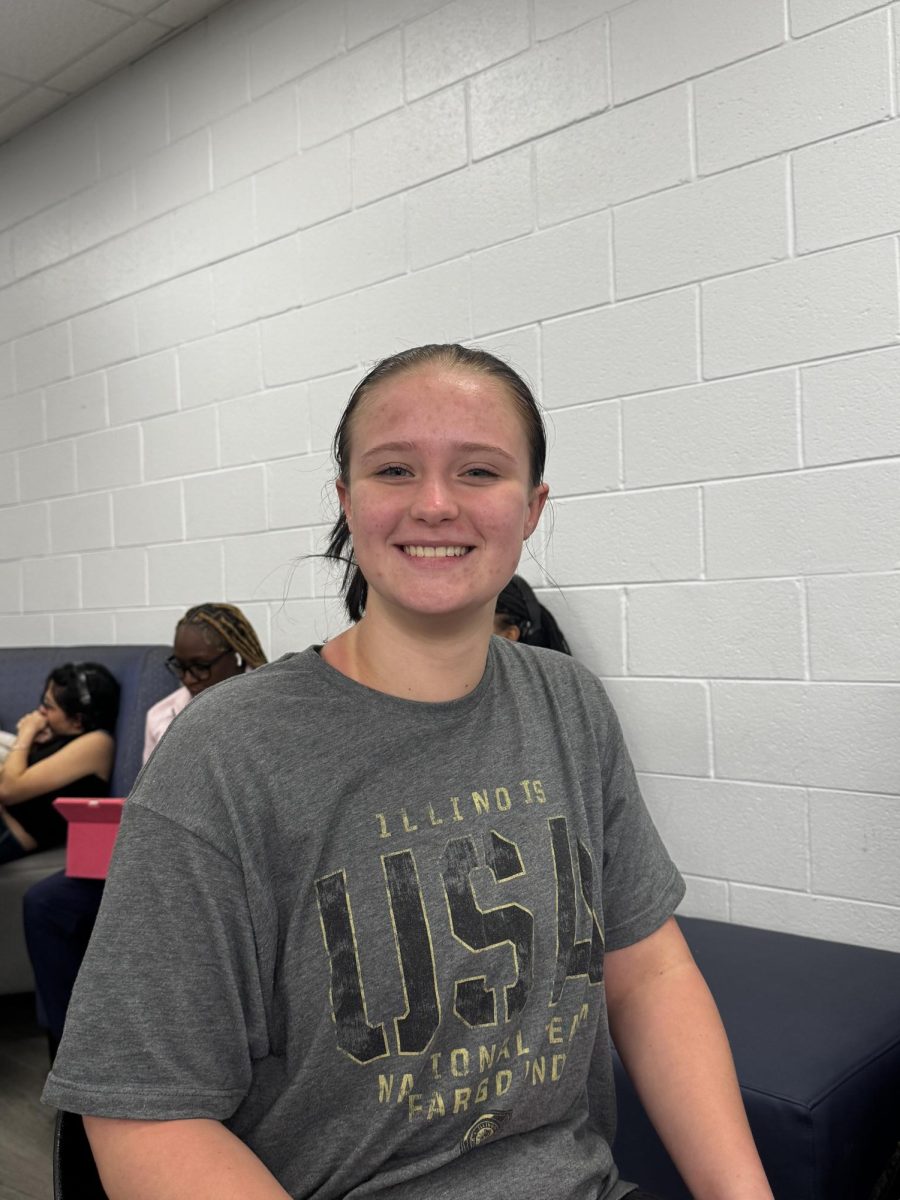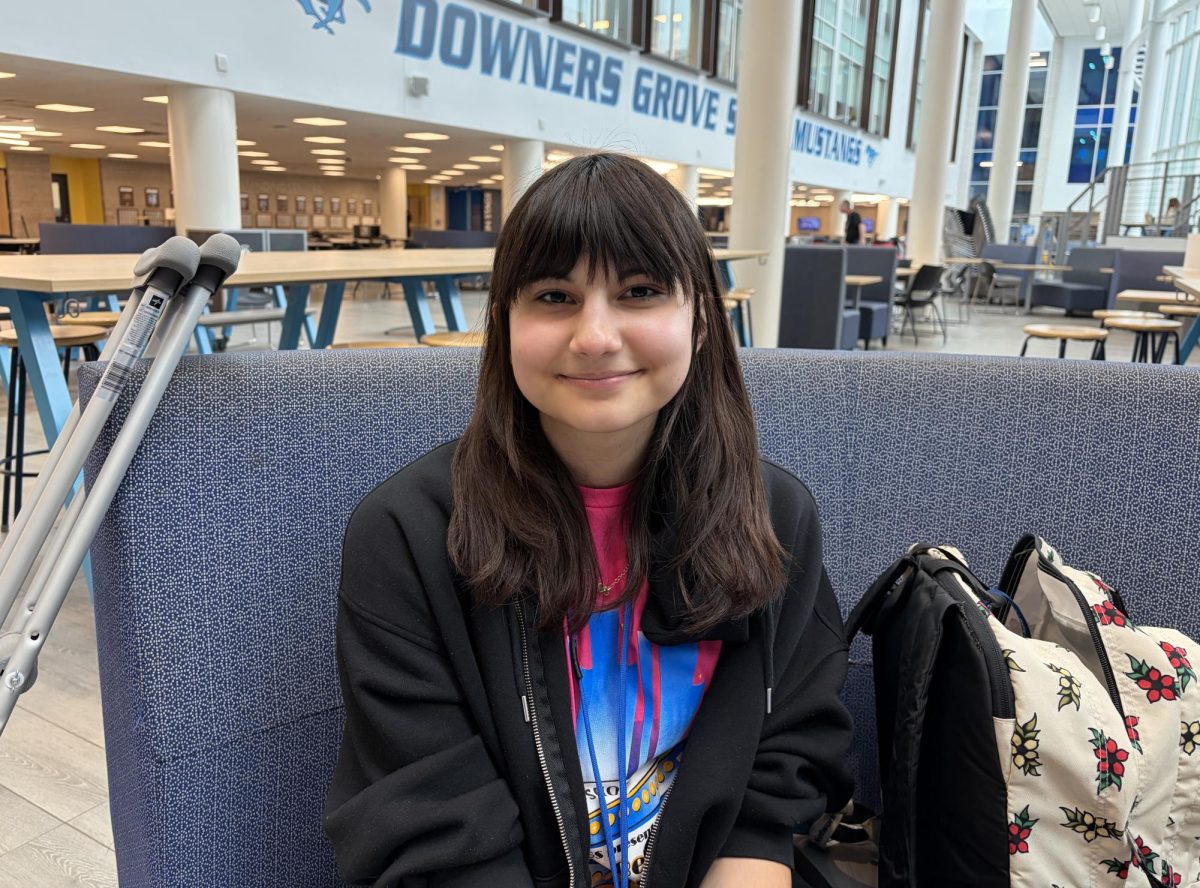


“I remember this panic dispersed throughout the people, and I think that’s what made it very real, very fast,” senior Zoya Siddiqui said, recalling her experience at the National Speech and Debate Tournament in June 2024.
Watching the Humorous Interpretation Finals from afar, Siddiqui remembers seeing an unidentified man take the stage and make a threatening move to reach into his bag. Immediately, thoughts of an active shooter ran through Siddiqui’s mind. The sheer amount of students at the tournament would make it the perfect target for violence, after all.
In the room, students made a run for it; ultimately, everyone was evacuated.
Although the National Speech and Debate Association later announced that there had been no weapons involved, the threat of an active shooter was real for the students, especially in the hour immediately following the incident. In a country where 48,000 people die from gun violence each year, and where school shootings permeate the environment, student fears about active shooters are unsurprising.
In comparing deaths from gun violence in the United States with other countries, the United States almost seems dystopian, ranking in the 92 percentile for firearm mortality for children and teens. In fact, the United States’ status as a global superpower and highly developed country seems at odds with its ranking as 16 out of 204 countries for firearm mortality.
“There needs to be stricter gun control in various states or countries. I also think open carry laws are sort of detrimental to keeping school environments safe,” Siddiqui said.
Indeed, the data suggests that stricter gun control would be effective in preventing some school shootings. As of now, many states are making it easier for children and young adults to get access to firearms, while organizations like the National Rifle Association have obstructed movement towards extensive research on firearm-related injuries in the United States.
Gun violence has always been a reality since the invention of the firearm, but mass shootings at schools have only become a problem in recent years.
After the infamous shooting at Columbine High School in 1999, the effects extended far beyond the 13 people left dead – from the acceptance of gun violence as a part of the culture, to new safety procedures that schools implemented in the years following. But perhaps most frightening about the so-called “Columbine effect” was the wave of copycat crimes that followed. To date, more than 50 shooters have alluded to Columbine as part of their motive to target their own nearby schools.
In fact, when Connecticut faced the deadliest mass shooting in its history in 2012, it was a Columbine-obsessed gunman who was responsible for the deaths of 26 people at Sandy Hook Elementary School. Although these are perhaps the most recognizable incidents, they are far from the only ones. Between 2000 and 2022, the United States experienced more than 100 public mass shootings.
In the early 2000s, no one could have known how common school shootings would become. After Columbine, the idea that gun violence would remain an unofficial part of the United States education system seemed ludicrous.
For Principal Arwen Lyp, her teaching career began as widespread gun violence did too. As a first-year teacher in 1999, Columbine was beyond jarring.
“I do remember, as a first teacher, along with teachers all over the country, but especially because it was my first year, just being terrified and shocked and appalled that such a thing would happen,” Lyp said.
Before the Columbine shooting, students had no reason to fear for their lives at school, but now, gun violence has become a part of American culture, embedded in politics, in media, and in the routine shooter drills many schools conduct.
For teachers like library Department Chair Kimberly Pakowski, the looming reality of gun violence has provoked a noticeable shift in how they view the classroom setting.
“As a teenager in the eighties and early nineties, I don’t remember ever thinking about this, I don’t remember coming into school and thinking about active shooters, about drills. Now, as an adult, I think about that all the time,” Pakowski said.
Even the students who have grown up with gun violence notice generational differences amongst themselves.
“When I was younger, in kindergarten, first grade, third grade, the idea of an active shooter in the building never even occurred to me. You go talk to these little kids that are in these grades, and it has become a reality for them,” Siddiqui said.
Necessarily, the increasing prevalence of gun violence provoked discussion about how to protect students in the case of an active shooter. After Columbine, schools knew that gun violence was a tangible threat to students and began to train teachers on lockdown procedures. At the time, the widely accepted approach was to have students hide in the corner, with lights off and classroom doors closed.
If students wanted to make a run for it, teachers were told to say no.
“We were trying to say, ‘no, you can’t go out the windows. There might be a shooter outside. We’re going to stay in the room and hide silently,’ ” Lyp said.
According to Lyp, the administration would also announce a “secret code word” so that they could be recognized when knocking on teachers’ doors during a drill.
“I remember my students at the time being like, ‘but if they announced the code word and you have to go into the hallway and unlock the door, what do we do if something happens to you?’ ” Lyp said.
In retrospect, Lyp admits that there was a lot that didn’t feel completely right for her or her students.
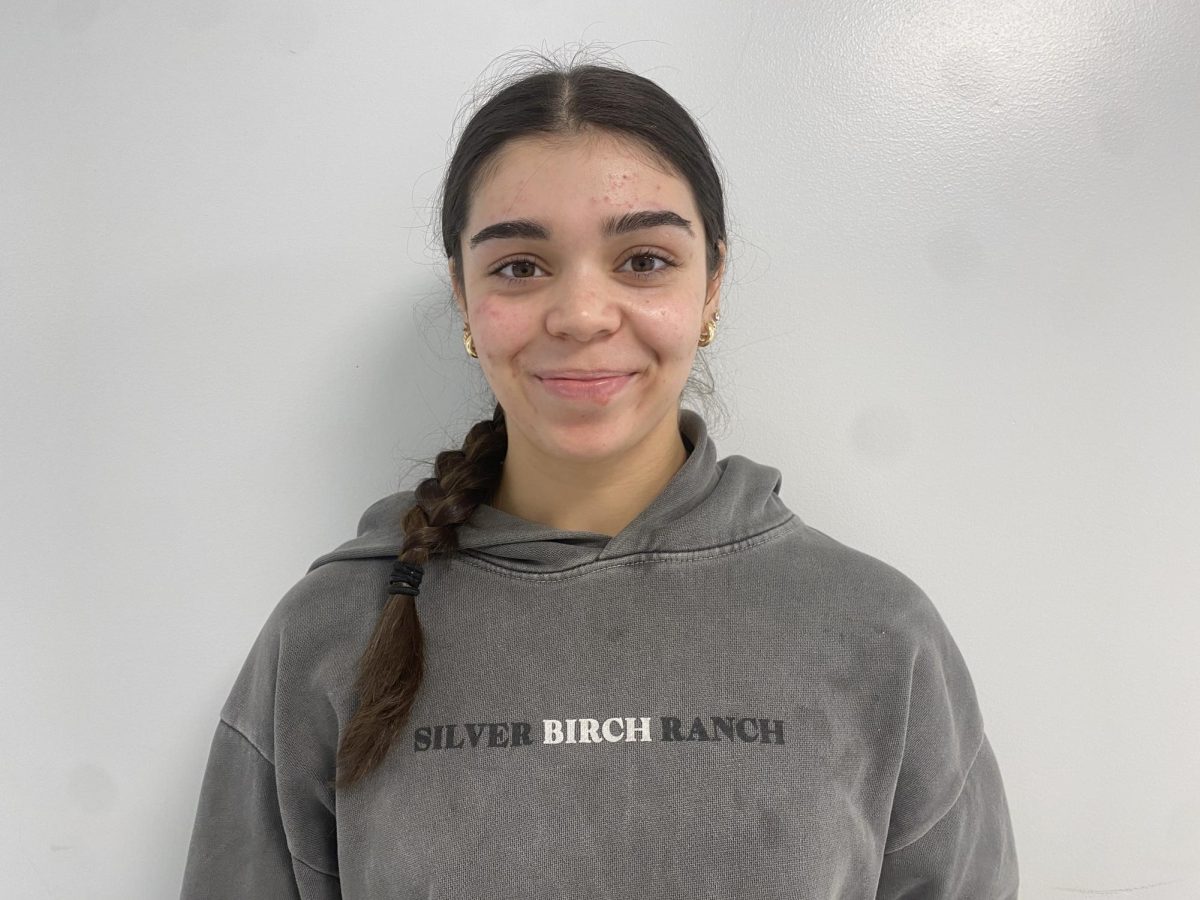
In recent years, however, schools across the country have shifted towards an emphasis on individual decision-making, rather than an automatic move to stay in hiding in the classroom. For senior Daniela Giuffre, this shift signals a more serious approach to the possibility of an active shooter.
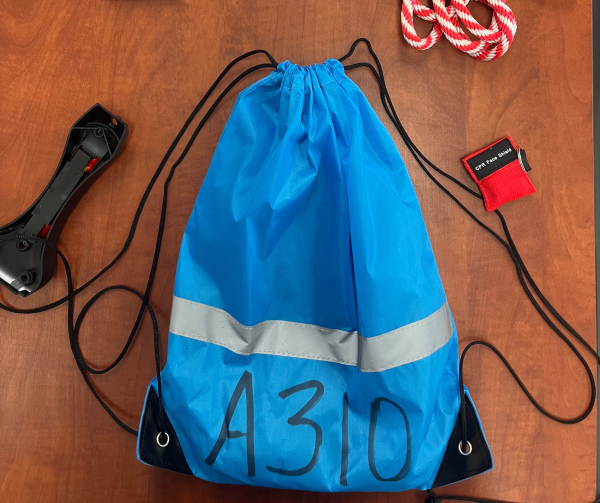
“Lately, when the school started implementing the ALICE stuff, it’s a whole procedure of, you guys got to tie a rope on the door. You have to hold the door handle; you have to board the desks against the door and then go to a corner and then arm yourself,” Giuffre said.
ALICE stands for Alert, Lockdown, Inform, Counter, and Evacuate, five steps that work in tandem to ensure students have a variety of options to keep themselves safe in the case of an active shooter.
(Evangeline Selking)
“You have to make the best decision in the moment for you, for your class, for your space, based on what you know around you. It’s really interesting to see that shift from a more wait, and see what people share with you,” Pakowski said.
Aside from the evolution of safety procedures for students, schools like DGS have also incorporated more advanced security measures.
“One of the things that they train the police force, and what they train us, in ALICE training, is that if there ever is an active shooter, a gun will stop another gun,” Lyp said.
Because of this, both the school resource officer and lead security officer at DGS carry.
“We are not unique in the Western suburbs of having more than one person in the building who have weapons in the building, and the sole reason why they have them is to be able to stop…an active shooter,” Lyp said.
Despite the implementation of ALICE and the administration’s emphasis on safety and security, schools like DGS are still learning how to effectively counteract an active shooter, perhaps a testament to the unfortunate longevity of school shootings. More than 20 years in, there seems to be no one-size-fits-all answer for student safety.
“It’s such a hard thing to prepare for, because on one hand, you hope you never have to be prepared for it, but on the other hand, you know that there is a real possibility that it could happen,” Siddiqui said.

(Evangeline Selking)
Lyp recounts how the difficulty of approaching active shooter drills was brought to a head in the 2023 to 2024 school year, with the malfunctioning of the Bluepoint alarm system that notifies the school of an active shooter. Immediately after the Bluepoint was mistakenly set off–due to a technical glitch in a Bluepoint key fob–chaos ensued: many classrooms evacuated, others barricaded, and some even continued with the lesson at hand.
“I was taking a test for my math class, Hearing [the alarm], I was terrified, because I’m like, oh my gosh, this stuff can actually happen during a normal school day, and it’s not just like a little event that we prepare for,” Giuffre said.
Lyp and the rest of the administration quickly realized that the system was alerting in error, yet for the next 90 seconds that the Bluepoint alarm looped its alert, the rest of the school believed that a shooter was present in the building.
Giuffre had often felt like she was just going through the motions when doing shooter drills, but the Bluepoint malfunction made her realize that gun violence could truly affect DGS, not just the schools listed in news headlines.
“It was like a wake-up call,” Giuffre said.
The Bluepoint malfunction had happened after a recent training drill, where students and teachers had practiced barricading and securing their doors. For this reason, the malfunction, though traumatizing for many, provided valuable insights for the administration as to how the school would react in a real situation.
“As awful as it was, positives can come out of it because we were able to see how we actually would react, right? So basically, the training is helping, people knew what to do. They knew how they should respond,” Pakowski said.
The administration was also able to target issues brought to light by the Bluepoint malfunction. In the months following, the school implemented more hands-on practice for students so that they could get used to barricading or otherwise securing the classroom. Over the summer, the PA system was revamped so that administrators could interrupt the 90-second Bluepoint alert message with important announcements, a feature that would’ve been crucial in communicating to students the reality of the situation that day.
Yet despite the various adaptations schools have made in order to combat an active shooter threat, the issue of gun violence remains.
Still, Lyp is hopeful that tangible solutions are in reach. According to Lyp, the FBI releases research each year on how school shootings can best be prevented. For schools around the country, the ultimate safety measure just might not be locking classroom doors or monitoring cameras.
“Every year, they say, if school administrators are looking for one thing they can do…is to help every student feel like they belong in their high school,” Lyp said.
This is usually because the school shooter is a student who felt ostracized by their peers and teachers. By making sure that every student feels a sense of belonging, the school can work towards preventing gun violence on a more interpersonal level.
Ultimately, how each community and school responds to the threat of gun violence will continue to shape the conversation surrounding the issue. Decades in the making, gun violence has left its mark and will most likely continue to do so.
“I hope that by the time I retire, when my children grow up and become teachers, I hope this stops becoming such a part of our narrative,” Lyp said.