




Lent is a 40 day period imitating the Christian Bible story of Jesus’ 40 day fast in the desert, during which most observers choose to sacrifice an unsuitable habit or take on a goal in order to grow closer to God. According to New Life Ithaca, the recognition of a 40 day liturgical season before Easter can be traced back to the Council of Nicea in 325 AD. The Museum of the Bible shares that Ash Wednesday was later established by Pope Gregory I, who encouraged 40 days of eating one meal a day without meat or dairy with the exclusion of Sundays; fasting during modern Lent is far less strict.
Ramadan is slightly shorter than Lent, lasting closer to 30 days and commemorating the revelation of the Quran to the Prophet Mohammad in 610 AD. The core values have remained the same and observers abstain from food and drinks from sunrise to sunset in hopes of fostering gratitude and closeness to God. Sound Vision reveals that the practice of Ramadan was formalized around 624 AD, with the command of mandatory fasting appearing after the Prophet Mohammad’s migration from Mecca to Medina.
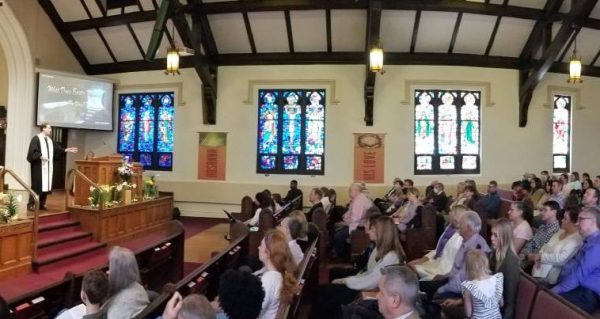
Since these practices have existed for so long, some people maintiain that Lent and Ramadan are only centered around one religious tradition, and that everyone should observe these holy periods in order to properly follow their faith. Junior Alyssa O’Conner believes the idea that every Christian must participate in Lent for spiritual validation, and that nobody is allowed to make mistakes, is a misconception.
“One [misconception] is that everyone wants to [participate]’. And that you have to, or you’re a bad Christian….that’s not true. It’s supposed to help you focus on what God did for you and what he sacrificed and helps you sacrifice; that’s bringing more recognition to him,” O’Conner said.
Pastor Ramona Grant of First Congregational United Church of Christ believes another general misjudgement is that Lent is only about giving up a habit or item that is harmful to one’s physical or mental health.
“A common misconception is that Lent is mainly about giving up chocolate or social media or something like that. While those things can be helpful, the deeper purpose is about spiritual renewal… I’m giving this up to be the person who I believe I’m being invited to be by God…So I wouldn’t say give up chocolate if you’re going to go back to it tomorrow. I wouldn’t give up social media if you’re going to go back to it as heavily,” Grant said.
Similarly, Hussain Abdullah, who volunteers as an Imam at 75th Street ICN Mosque, believes that the habits adopted in Ramadan should exist beyond the month itself. He argues that one should carry the spirit of Ramadan into the remainder of the year.
“Ramadan is not a month where we all act like the perfect Muslims for one month, and then we forget everything the next month. It is a spiritual month where we set standards that we hope to maintain throughout the entire year… It’s about disciplining the tongue, the eyes and the heart. The Prophet Muhammad warned us that ‘who does not leave false speech gains little from hunger,’” Abdullah said.
Consistent with O’Conner’s argument, Abdullah acknowledged that people have contrasting beliefs, and therefore, Ramadan is different for everybody. He also emphasized that the month does not only signify a time of hardship for Muslims.
“Some struggle, some really benefit and some are just returning after being distant from a long time away from Allah…fasting bears a hard burden. While it does bear a burden physically, it is also rather a time of mercy, forgiveness and liberation from those burdens through prayer and recitation of the Quran,” Abdullah said.
Junior Alvina Siddiqui also observes Ramadan, and every year she sets goals to strengthen her Iman (inner faith) and to address her internal flaws.
“Ramadan reminds me to show gratitude for all that I have around me, from the people in my life and to every bite of food that I am blessed with. Ramadan is known for the control of food and thirst, but it also signifies the control of back biting, gossiping and even wasting time by being lazy. Ramadan truly shows me how much I have in this life and encourages me to donate and help the needy,” Siddiqui said.
Community is very important in the Islamic faith. Ramadan allows Muslims to meet and connect with others who are also observing the month in order to support one another.
“We muslims come together too as a community in this month, to pray and worship together… making good connections with those who we may have not known before,” Siddiqui said.
Most Christians share the Muslim value of community. Grant described the importance of worshiping together and holding one another accountable. O’Conner utilizes family and friends when she struggles to achieve her goals during the Lenten season.
“Honestly, the materials themselves, they’ve been hard to give up, because they’re things that I use or do every day. But then I remind myself what I’m doing it for, and that constantly motivates me, and I have people who hold me accountable. When I say I want to eat something sweet, she [her friend] yells at me,” O’Conner said.
Grant has also occasionally struggled to honour the Lenten season, acknowledging the difficulties of focusing on religion in the midst of busy schedules or workdays.
“Life moves quickly and it’s easy for Lent to become something that I’ve got to do again, just another thing to check off my calendar or to-do list. But sometimes, that struggle is actually the invitation. Lent reminds us to pause in the middle of our busy lives and remember what truly matters. So I’m grateful for this season because it allows me to be like, oh, life is busy. How do we build in practices for pause and reflection?” Grant said.
Grant claims that to combat stress and constant obligations, a small action someone can take is simply setting aside a few minutes to check in with yourself. This could include reading a poem or a piece of scripture, or listing things you are grateful for.
“I think small consistent moments of intention can shape our hearts more than we realize and really set the tone for our day if we had the practice around it,” Grant said.
Abdullah noted the slight differences between Ramadan and Lent in the structure of fasting and the Muslim use of the lunar cycle in comparison to the Christian observance of a fixed liturgical season. However, he also appreciates the vast similarities between the two holy events.
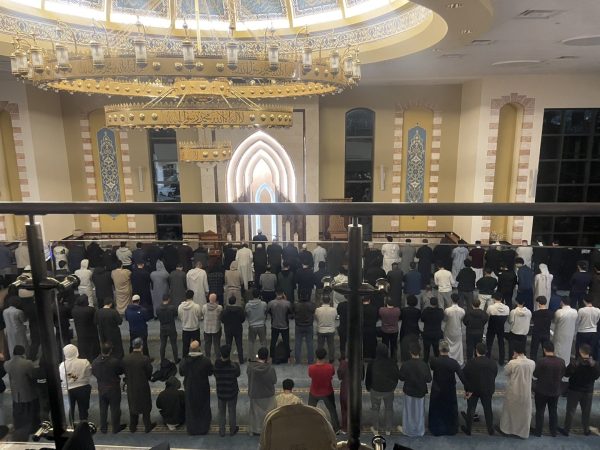
“Beyond the differences, there is something deeply human and spiritual, a shared yearning to purify the soul and return to the Creator,” Abdullah said.
Grant has a similar perspective and chooses to embrace all religions or ways of worship, even if they differ from her own beliefs.
“At their heart, both traditions invite people to grow closer to God, and to live more faithfully in the world, and we can see those connections when we are in community with one another, and we’re listening to each other’s faith journeys. They are both beautiful expressions of people to their God and how they want to be more faithful and what’s our response to a God that loves us so much,” Grant said.
O’Conner emphasized the importance of students educating themselves on different religious practices and showing respect towards one another, regardless of beliefs.
“If you have friends, educate yourself, even if you’re not a part of their religion, ’cause some people might think it’s stupid, ‘Oh why am I giving something up?’ But a lot of people are typically pretty respectful….A lot of people who I know participate in Ramadan, or friends of friends participate in Ramadan. Everybody’s typically very supportive and very aware, and try to be very caring about that,” O’Conner said.