



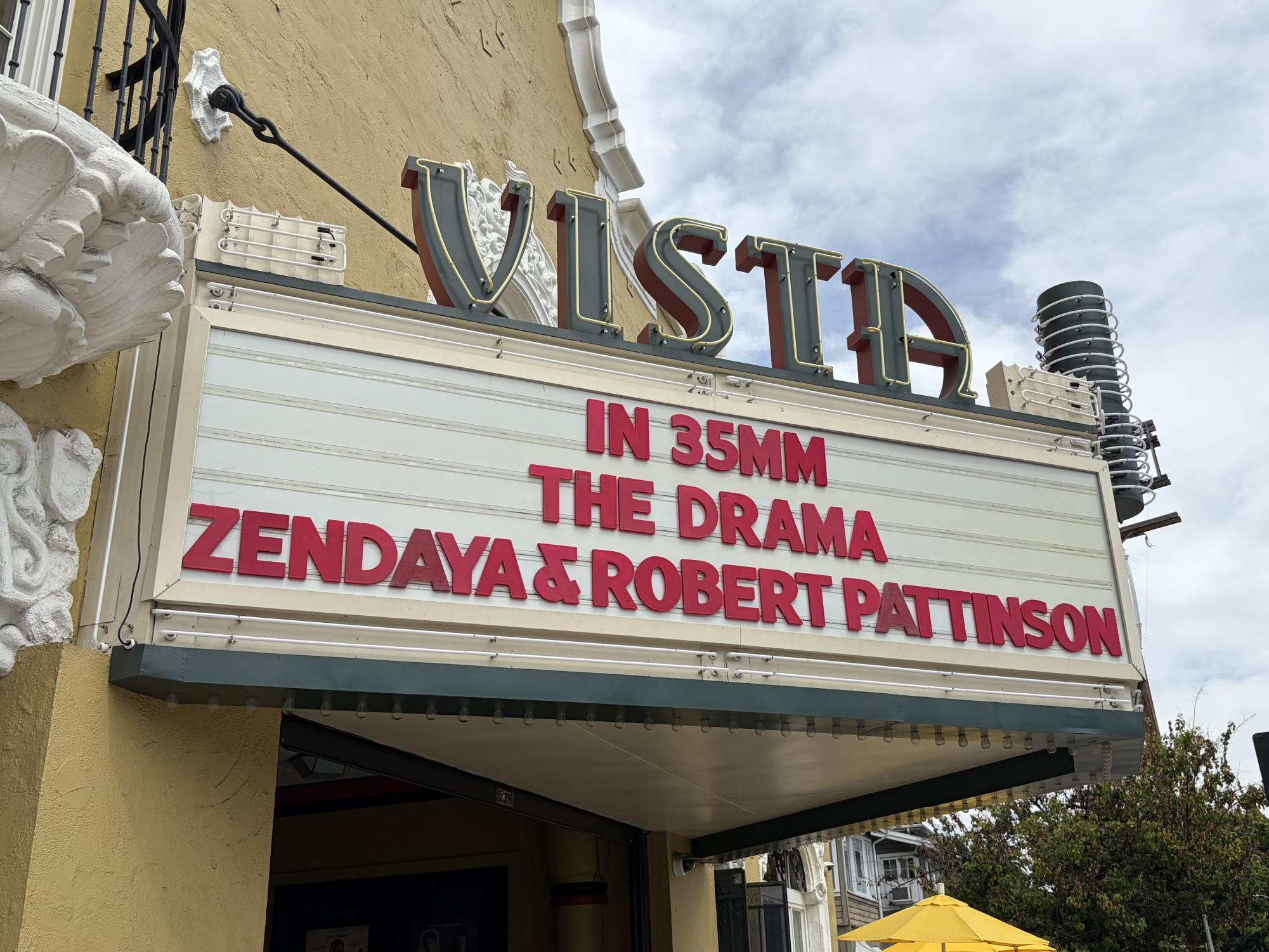
Fighting, screaming, deep secrets and drama – what more could a wedding need? A24’s newest film “The Drama” delivers all of this and more. There will be spoilers ahead so read with caution.
Released on April 3rd, “The Drama” is directed by Kristoffer Borgli and stars Zendaya, Robert Pattinson, Alaina Haim and Mamoudou Athie.
The film follows Emma (Zendaya) and Charlie (Pattinson) during the week leading up to their wedding. One night, the two and their friends decide to share the worst thing they’ve ever done. When Emma confesses her secret, the couple’s world crumbles around them as Charlie realizes he may never have truly known the woman he loves.
“The Drama” tackles the issue of young people romanticizing violence online and how that influence can seep into their real life. Emma’s secret of attempting a school shooting isn’t something to be taken lightly and, at times, it feels like the film is glossing over what she almost did. Even in Emma’s explanation, she says she didn’t follow through because another shooting happened earlier that day, but it leaves the question as to what shifted her mind; was it the reactions of others or did she just decide not to?
While the fuzziness around Emma’s motives can bring hesitation to the audience surrounding her character, this vague answer highlights Zendaya’s standout performance of the film in how she’s able to wordlessly convey Emma’s internal conflict over her secret. The film establishes Emma as a person who gives second chances and, because of this, Zendaya keeps her performance light and upbeat, always giving someone the benefit of the doubt, whether it’s a look at someone who’s speaking poorly about another person or giving an encouraging smile to someone else. As the film progresses, her performance becomes more short tempered as Emma starts to doubt if she’s even owed a second chance; in many instances you’re able to see the hurt flash across Emma’s face before she composes herself, as if she’s not allowed to feel upset.
The editing and shot composition of the film also helps convey this much needed shift in tone. As Emma’s secret is broken to the group, the camera gets closer and closer to each character, eventually isolating each character in their own shot as the conversation goes back and forth, creating a cramped feeling that elevates how intense the scene is.
Adding to the shifting tone of “The Drama” is the score composed by Daniel Pemberton which is made up entirely of flutes, giving the music a breathy and light quality to it. Throughout the film, the score is used very minimally, so when it is used, the impact is greater than if it was constantly scattered in the film. This also means that the silence in the film is very important as well, highlighting certain moments, such as Emma and Charlie’s final conversation with the right amount of seriousness.
“The Drama” dives deep into how one’s past can affect the others in their life, but it also highlights the complicated mind of a teenager. While the film leaves a lot of questions unanswered about Emma’s initial motives, this adds to the overall story because it allows the audience to make up their own minds instead of the story spoon feeding them answers; this creates a strong story for many to enjoy and discuss.