



Most high school students who have a license drive their families ‘shared car’ or buy their parents’ old car after working so many hours at their job. A high school student’s ability to buy a used sports car or buy their parents’ sports car is rare. Despite this, a few upperclassmen at DGS have become sports car owners, promoting car culture at DGS and sharing their enthusiasm.
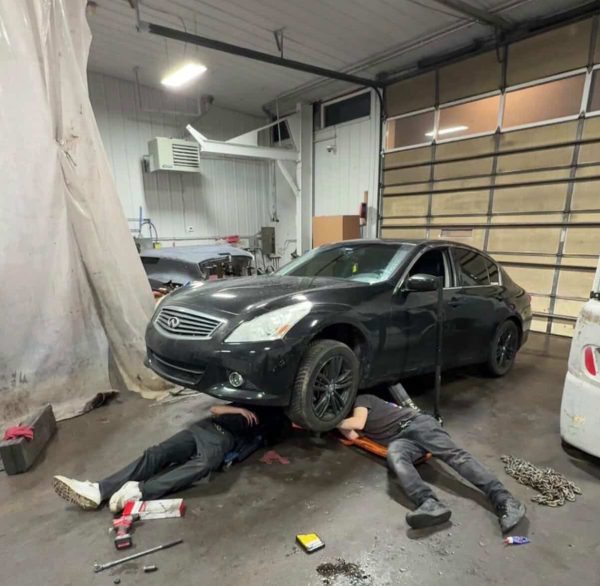
Erikas Karaliunas is an 18-year-old high school car enthusiast who owns an Infiniti G37. He has modded the car for better performance and looks. Karaliunas’s modifications to his car were mostly completed in his driveway.
“I chose it [his Infiniti G37] because it’s a bit more expensive, but still an affordable sports car that is versatile, meaning [good at] speed and drifting. My dad had this car many years back, so you can say I’m continuing the legacy,” Karaliunas said.
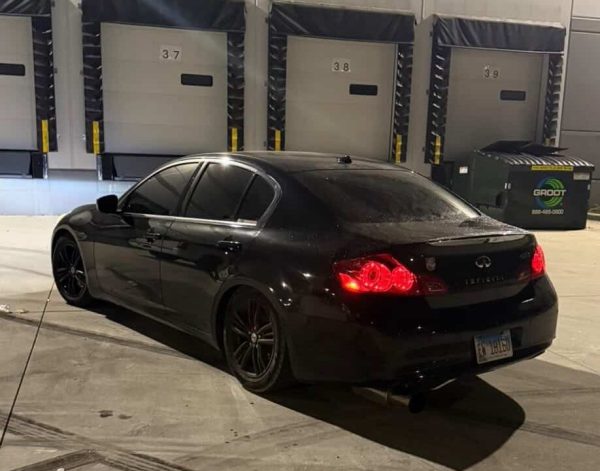
Karaliunas has spent over a $1,000 on upgrades to his car over the past year of owning it.
“It is lowered, has cold air intakes, and a full exhaust system. I plan to get it tuned as well. I chose it because mods for this car are relatively cheap and unlock a lot of power.
Karaliunas does not plan to modify his car further.
I don’t plan to mod it anymore, and as for mods, I [already] have cold air intakes 300$, lowering springs that lower the car 400$, and an exhaust system 500$” Karaliunas said.
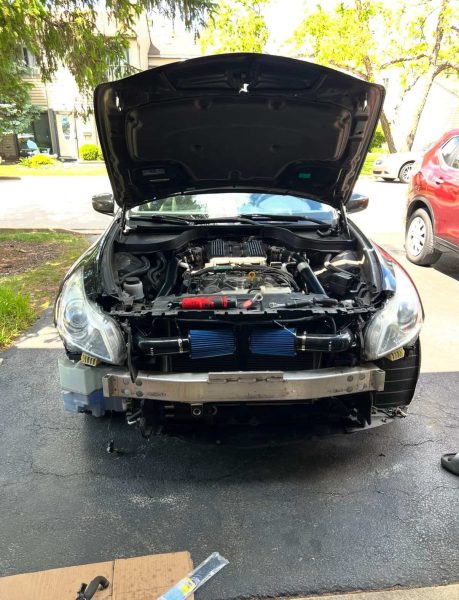
His exhaust and intake overhauls were a major part of his upgrades to the power of the car and provided it with elevated horsepower.
“Having an exhaust and intakes can increase power by a lot or a little, depending on the car, but how it works is that cold air intakes draw in cold air from the front of the car. Colder air is more oxygen-dense, resulting in better combustion. An aftermarket exhaust system opens up the exhaust to fewer restrictions and less back pressure, increasing horsepower,” Karaliunas said.
Karaliunas has upgraded the car’s horsepower by 25 or 27 hp. Additionally, he created potential for the car to be professionally tuned and increase the car’s horsepower output by 65 horsepower.
“With mods you can put on in your driveway, I’d say I’m pushing around 350-355 hp now. Once I get tuned, it’ll be around 400-420 hp,” Karaliunas said.
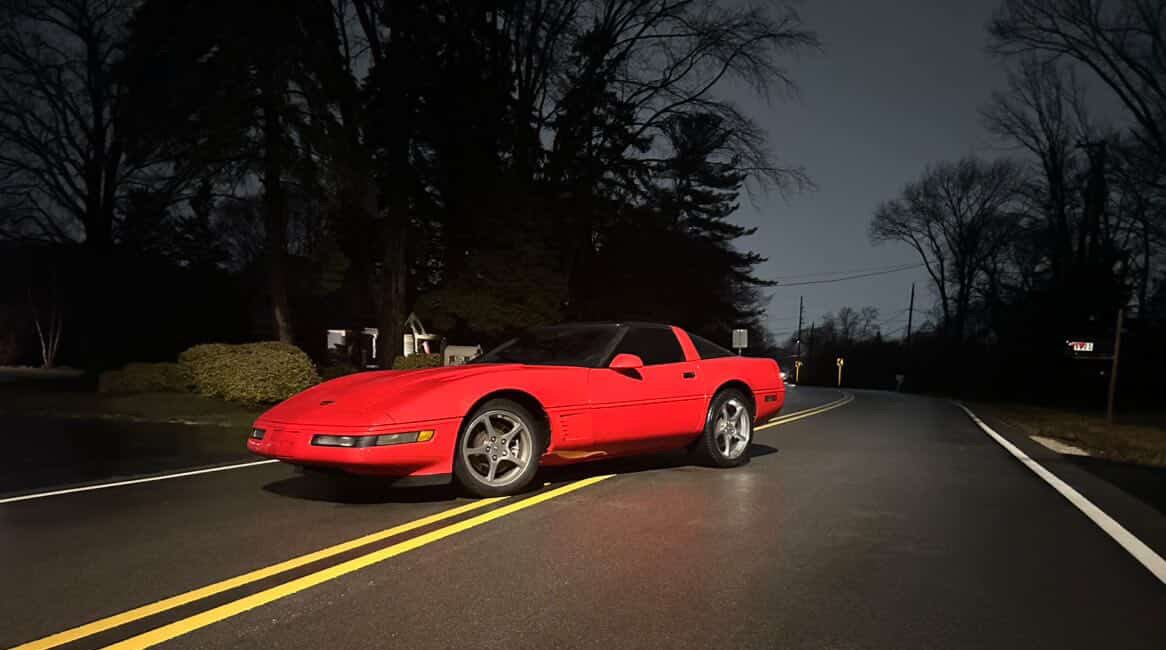
Junior Michael Weinholtz is another student who owns a sports car and is actively working on it. While most students spend their time after school participating in sports and extracurriculars, Weinholtz can be found driving his sports car down the highway.
“I drive a 1995 Crovette. I’ve always liked them, and my brother bought two Corvettes, so I grew up around them. And my dad always took me to car shows when I was younger,” Weinholtz said
Last year, Weinholtz worked countless hours at his job at Raising Cane’s so that he could afford to purchase a Corvette. After building up enough money, he found a listing on Facebook Marketplace advertising a red 1995 Corvette that was within his price range.
A 1995 Corvette produces 300 horsepower stock, which is extremely powerful considering the car’s light weight of 3,203 lbs. This allows a corvette to reach a top speed of 179 miles per hour.
“It’s just fast, that’s all it is, there are no awesome features. I got AC and heat, but other than that, I have a 300-hp Chevy small-block under the hood. It’s pretty cramped inside, especially if you’re 6ft 200lbs, but I make it work,” Weinholtz said.

Despite the popular interest in sports cars and the fandom promoted on social media, students like Weinholtz and Karaliunas believe that car culture is not as massive as it may seem. Considering the average used car price in December of 2025 was $26,043.
Senior Miguel Mejia does not currently own a sports car because of the high price of buying one. However, Mejia desires to buy a higher-end car when he has enough money set aside.
“I feel like whenever I’m financially stable, I would love to buy a Supra and modify it the best I can. I’m hoping to buy it by 28. And I don’t really want to buy a nicer car, I’d rather go for nice and reliable like a Lexus IS 350 or a GR 86,” Mejia said
Weinholtz believes that car culture in a high school setting is limited to students who have enough time to work long hours.
“There isn’t really a big car scene at DGS, I only know of three other people with sports cars. I think that’s partially because it is difficult to work enough hours to buy a sports car while being a full-time student,” Weinholtz said.
P.E. teacher Pablo Medina went to high school in the late 80s, where, at the time, he worked a job after school to be able to afford his own sports car.
“So in high school, I owned a 67 Camaro. This was in 1988, and I mean, cars were easy to work on because there were no computers, versus cars now, I would not touch so I don’t know what else,” Medina said.
Medina reflects on the difference between buying a used car as a teenager in the 1980s and the 2020s.
“They are ridiculous, because back then, you could work a part-time job as I did at Portillo’s, save up enough money, and buy a $1500 or $2000 sports car and buy parts that were not that expensive. Today, you cannot do that,” Medina said.