



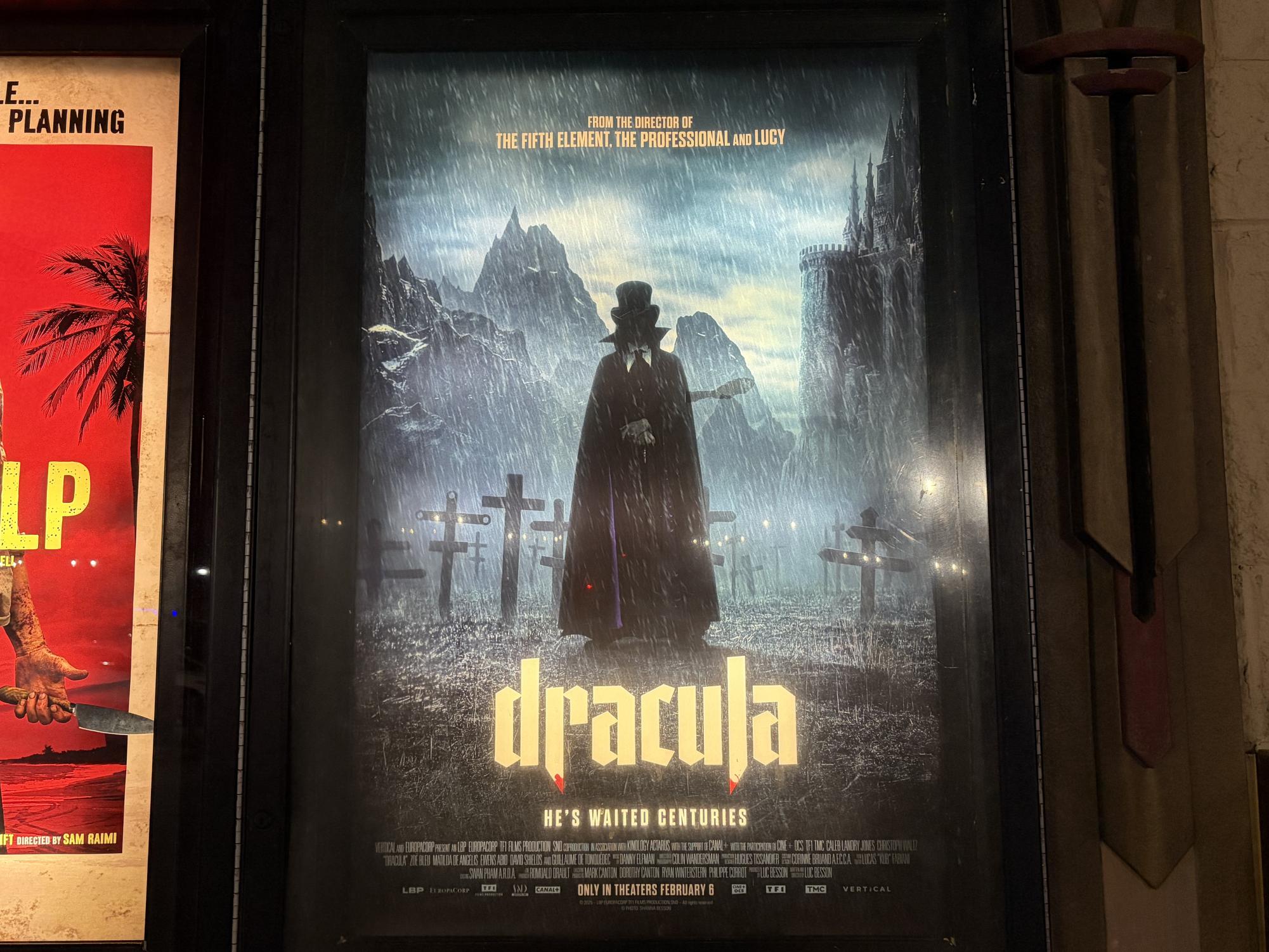
There are many old stories that find themselves in the hands of new “authors” putting their own spin on the tale, but sometimes these new ideas bring the downfall of their adaptation. This is what happened to the newest adaptation of “Dracula.”
Released on Feb. 6 in the U.S., “Dracula” is directed by Luc Besson and stars Caleb Landry Jones, Zoe Bleu and Christopher Waltz.
The tale of “Dracula” is one that many are familiar with, so how a director interprets the story is very important to audiences who have come to love the original. Hence, why the creative liberties that Besson takes with this story cause the film’s demise.
The one major change in Besson’s adaptation is the inclusion of a perfume that Count Dracula uses to seduce people in an attempt to find his recanted lover. This plot point felt very out of place in the story of Dracula and made the story feel less haunting. The perfume plot line also climaxes in a dance sequence, which didn’t help the unserious feeling the film already gave audiences.
Another aspect that really takes audiences out of the story is the choppy dialogue. There are many lines in the film that seem like they were intended to feel romantic, but they don’t come across that way when put into practice. Towards the end of the film, when Dracula and Mina are together discussing how God might not understand their love, and in response, Mina says, “And if he doesn’t, he can go to hell;” this line is a very jarring line and doesn’t make sense for the time period.
The actors were able to make the best of what they were given, but the lackluster script contributed to stiff performances. The awkward dialogue wasn’t helping the authenticity of their performances and came off very forced on screen. If the script had been less lifeless, their performances would’ve elevated the film instead of taking away from it.
In charge of outfits for the film was costume designer Corinne Braund. While the costumes she created weren’t historically accurate, their elegant fantasy design fit the nature of the story. The costumes, especially during Dracula’s past, were extravagant with many fantasy elements woven into them, such as knights’ helmets being dragon heads.
The score is composed by Danny Elfman, and his style is very recognizable throughout the music. Known for his work on whimsical horror films like “The Nightmare Before Christmas,” “Corpse Bride” and “Edward Scissorhands,” his style lends itself to the more fantastical interpretation of “Dracula.” In particular, the melody that plays an integral part of Dracula and Elisabeta’s love story fits with the characters very well, especially with the use of the light percussion that gives the feeling of lost love.
While “Dracula” has some interesting interpretations of the story surrounding the costumes and score, the story itself falls very flat with the new plot interpretations. If one were to watch a “Dracula” film adaptation, it’s best they go with the Francis Ford Coppola version instead for a more accurate tale and better acting.