During the winter season, it was common for children to quickly gather around the TV as snow pelted the ground, eagerly waiting to hear that school would be closed for the day. Even decades later, students were equally excited for an email detailing the happy circumstances of the lack of classes when flurries of cold wind bustled outside. However, now those normal snow days have changed to e-Learning days.
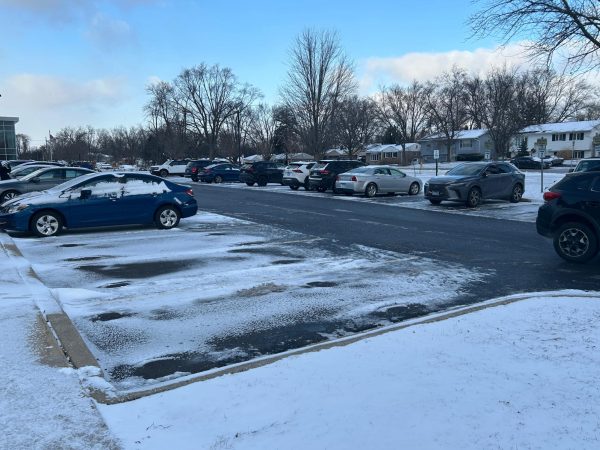
DGS considers or declares a day with intense cold weather and temperature as a non-attendance day, the official term for a snow day used by administration, based on factors such as building conditions, the amount of snow currently on the road and parking lot and if the buses are operational. At least one of these factors must be deemed unsafe before 6:00 AM that day. This information can be found on the D99 Website.
During a non-attendance day, students participate in online classes. Before the modern use of e-Learning days to supplement in person classes, much more thought was put into when school should be cancelled. Dr. Karen Taylor explains this older process.
“In the past, before we had e-Learning, It was always a question of whether the last day of school would really be what we were anticipating it to be, or if it might be a day or two or three later, weather dependent during the school year… And now we have some flexibility to do e-Learning days when there’s inclement weather and it’s not safe to travel,” Dr. Taylor said.
Dr. Taylor commented that, even though in her position she was not personally affected by these scheduling changes, teachers, bus drivers and athletes were all affected by this change to the day when students get out of school.
“There’s work that has to be done to communicate with the bus companies and make sure that we’re going to have buses to get kids here those extra days… Sometimes it would interfere with maybe playoffs, some of our spring sports teams, the state series [that] extends beyond the end of the school year and [we] could have conflict there,” Dr. Taylor said.
After e-Learning days were implemented, they presented their own types of struggles such as the ability for students to attend online classes. Dr. Taylor mentioned that factors such as accessibility to the internet, personal disabilities, preference for in class assistance and overall differences in student households were a key factor in preparing for an e-learning day that administration could not control.
“There are students that really need the support of a human teacher in their presence to help keep them focused or offer them assistance and things like that, or if they’ve got distractions at home that might prevent them from really being able to pay attention,” Dr. Taylor said.
English teacher Lauren Morse believes that students’ ability to complete classwork during an e-learning depends on factors such as Chromebook accessibility, time to plan for the change in schedule and circumstances out of her control.
“With e-Learning, we have the opportunity to make some of that up. But, we don’t really know how much is happening at home or what students have access to depending on the day… So do they even have their Chromebooks?” Morse said.
Morse previously experienced travelling far distances during intense weather scenarios when DGS was considering closing or staying open. She provided her personal experience preparing for this change in her schedule.
“For the first 14 years of teaching here, I lived in the city, and so if at all, there may be a potential that there would be that borderline… I would have to plan ahead. So sometimes I would try to sleep at my aunt’s house out here or a friend’s house,” Morse said.
Morse additionally added that during another severe snow storm, she and a fellow teacher considered renting a hotel, driving there the night before the school day, and commuting to the building, instead of travelling during the winter storm.
“She was coming from Indiana, and I was coming from the city. So we knew if there was bad weather, there’d be more traffic or just slower conditions,” Morse said.
Students and their families are most affected by severe weather situations when snow storms, cold winds and icy roads are unexpected. Senior Jaleb Davison and his family prepare for these intense weather conditions by being up to date with forecasts and being prepared with the right gear.
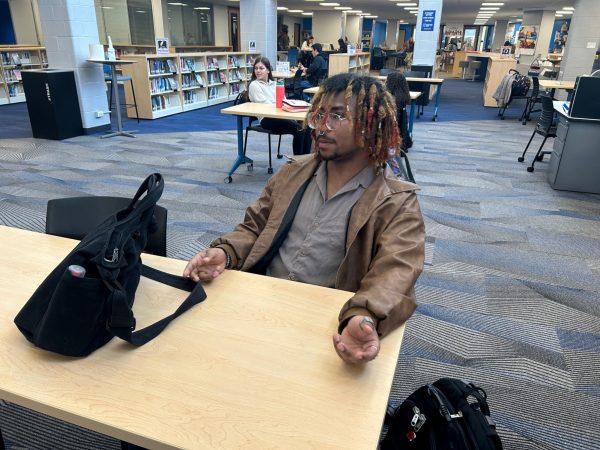
“I do like to prepare, me and my mom, we are huge preparers for the upcoming future… I have a lot of equipment for snow storms and stuff like that,” Davison said.
When classes are online due to intense weather, Davison prefers to complete his necessary schoolwork on his own; he believes that working online is beneficial for students’ learning.
“For someone like me, I tend to either get on the call or anything like that, and immediately go on mute and walk away… I’ll relearn all the stuff when I get into school, because I prefer more of a one on one, or more of a group, than just [an] over the computer call,” Davison said.
Davison also added that even though he prefers learning in person, e-Learning days do provide him with an opportunity to be active and do something when he would otherwise not.
“This one time I had [an] e-learning day, and it was for photography, and I just had to walk around my house and take photos about just random things… I like it when [school] forces you to get up and not be on your computer screen the entire day… I really like the fact that you have to get up and actually do something,” Davison said.
E-Learning days are not complete days off for students and teachers, and provide their own set of unique challenges in planning as well as classwork. However, the administration believes that online classes, instead of canceling school fully, will positively affect students, allowing them to continue learning throughout a day of intense and severe weather.
“I like that, because it’s like, yes, there’s snow outside, you know, we can’t go anywhere, can’t go into actual classes. But I like it when the school still cares… So it’s not just, you learn something, there’s a snow day, you forget everything,” Davison said.