





My dad is a firefighter and I have grown up seeing the heroics he offers his community every day. My father is always there for the people who need it most, but at times, his job can come at a cost to his own mental and physical health.
This is not only the story of my father, but the story of millions of first responders whose job often lead to lifelong fights against mental health.
According to the National Library of Medicine, prevalence of PTSD (post-traumatic stress disorder) in firefighters is nearly 57%, which is higher than that of military personnel at 37.8%.
PTSD is a mental health disorder that can stem from an extremely stressful or terrifying event.
AP Psychology Teacher Kimberly Pazdan explains the impact of PTSD on a firefighter’s life.
“PTSD can definitely make life more difficult for people because it impacts their mood and even energy levels,” Pazdan said.
Firefighters are especially susceptible because, according to Purdue Global, the repeated exposure to potentially traumatic events increases their chances of experiencing PTSD. Symptoms of PTSD include upsetting dreams or nightmares, flashbacks, memory problems and many others.
Although the prevalence is alarmingly high, many firefighters do not reach out for help because of the stigma surrounding mental health, especially among men.
Forest Park firefighter William Toth shed light on a common mindset inside the firehouse.
.In the fire service, many men still rely on a ‘macho man’ mentality. This can make it hard for first responders to ask for help or admit an issue,” Toth said.
Additionally, he spoke on the lack of support that many departments offer.
“This is compounded by some departments not having the resources to adequately support their firefighters, like critical incident debriefing,” Toth said.
According to The US Department of Labor, critical incident debriefing is a group process that is conducted after a traumatic event with individuals considered to be under stress from exposure. It is meant to be an early intervention for PTSD related symptoms.
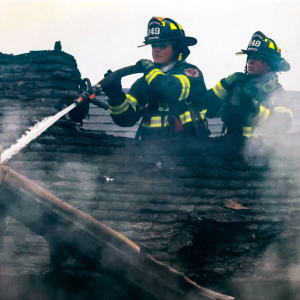
Many smaller departments do not have the funds to offer these types of support. However, when they are not offered, bigger issues have commonly arisen. Many firefighters do not receive the proper support for their mental health; some end up unable to fulfill their duties and have to file for duty disability.
According to the Cook County Pension Board, duty disability is a benefit given to those disabled as a result of an injury or illness that occurs due to the performance of their position.
Although PTSD seems like a small reason not to be able to work, some firefighters who have extreme PTSD can no longer be around stressful situations without having physical reactions akin to those of distress. The unreliability of this condition can cause serious problems in the workplace, especially given that firefighters need to be completely focused to fulfill their duties safely.
As the stigma surrounding mental health lowers and there is more of an emphasis on mental health awareness in fire departments, there has been a spike of these types of duty disabilities.
Laura Goodloe, a pension lawyer and partner at Pulchuski Goodloe LLC, gave her perspective on the trend of psychological disability filings over the last ten years.
“There has been a substantial increase in psychological disability filings over the past ten years. I would say the largest spike has occurred more so over the last three-five years,” Goodloe said.
Many departments, especially around urban areas, are seeing high call volumes, which increases a firefighter’s chance of experiencing trauma.
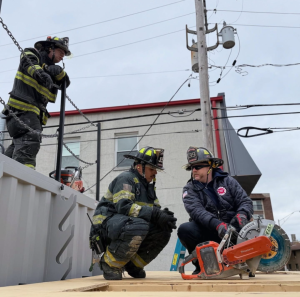
Credited to the Forest Park Fire Department. (Jillian Myers)
Goodloe continues to expand on the types of departments she sees filing for duty disability because of mental health.
“From my experience, departments with high call and response volumes, high stress situations, lack of inter-department morale, and strained relationships between the PD/FD[Police Departments and Fire Departments] and the municipality can create a higher prevalence in psych claims,” Goodloe said.
For example, the Forest Park Fire Department responds to nearly 4,300 calls a year, according to former Chief Phil Chapetta in an article by the Forest Park Review In contrast that same article states that departments nearby like River Forest only average 3,000 calls a year.
This means these firefighters are at higher risk for PTSD because they are constantly in traumatic situations. The high volume of calls for years on end are the types of situations that directly cause PTSD.
“[PTSD] can also occur from prolonged exposure like abuse or war,” Pazdan said.
However, even with all of these calls, there are still many ways for PTSD to be treated and for first responders to make a full recovery.
There are a myriad of different ways that PTSD can be treated, and research is still evolving to find treatments with the best results. However, most firefighters currently rely on medication.
When speaking with counselor Courtney Brown, she describes some of the most effective ways to cope with and treat PTSD.
“The best practice is medication prescribed and managed by a psychiatrist,” Brown said.
Additionally, there are highly effective therapies used to treat the common symptoms of PTSD.
“Since PTSD is an extreme example of Classical Conditioning, usually Cognitive Behavior Therapy or Exposure therapy works best. Exposure therapy slowly exposes the individual to their traumatic memories in a controlled, safe environment with the support of the therapist to help them reduce their stressors over time,” Pazdan said.
As the stigma around mental health continues to decrease, firefighters are increasingly willing to reach out for help when they need it.
However, the stress and trauma that cause the PTSD will always be present in a firefighter’s daily life.
Toth continues on to remind us of how different their lives are from many of ours.
“Compound lack of sleep, constant calls and stress and you can be playing with fire,” Toth said.
Ivy Bloomfield • Nov 11, 2025 at 12:35 pm
Great article!!