



DGS created welcoming, inclusive, policies that help students from all backgrounds connect and communicate, following the motto “you belong here.” This includes students in the LGBTQ+ community, who are equally supported and valued.
LGBTQ+ students were equally affected by school policies, by the behavior of the wider DGS community, and the companionship members of the community have with one another both in and out of school.
English teacher Lauren Mietelski stated that LGBTQ+ voices and ideas are presented in the English curriculum through books that are read throughout different English classes.
“In the English curriculum, there are LGBTQ voices represented in the literature we teach,” Mietelski said.
“The Color Purple” by Alice Walker and “Orlando” by Virginia Woolf include storylines and characters representative of the community. Though neither text solely focuses on the stories of LGBTQ+ characters.

Books containing LGBTQ+ characters, storylines and that focus on queer plots can be found in the library. Books such as “Every Day” and “Are We There Yet?” by David Levithan and “Annie On My Mind” by Nancy Garden focus on a main characters in same sex relationships, contain gender questioning themes and ideas at the forefront. These books and the previously listed “The Color Purple” can be found on the DGS Library Destiny Discover catalog.
Mietelski also added that the need for LGBTQ+ voices to be heard was pushed by both parents and students who were part of the community. This vocality did not affect any school policies at the time.
“I remember that parents and students were calling for more texts that represented more students, but that’s all I can remember. There weren’t any direct policy changes that I know of,” Mietelski said.
Junior Chloe Roegner provided perspective of her treatment in classes as a trans person. She feels the school is understanding of her gender identity, and teachers make her feel just like anyone else.
“There is such things as being overly supportive… But they [teachers] haven’t. They just [me] treated like normal people. It’s really nice; It’s like they never really bring it up, ‘well, you’re trans, so you can’t do this or you’re trans, so we have to do this.’ It’s been really nice,” Roegner said.
Roegner has met most of her friends, many also a part of the LGBTQ+ community, from her middle school and DGS has allowed for her and her peers to naturally feel accepted in the school system, even allowing Roegner to change her name in the system from her dead-name to her preferred name. Deadname being the term for the name someone went by before they transitioned.
However, Roegner adds that in certain classes, disdain and discrimination still exist and has affected people she knows. This harassment is mainly from fellow students. Who have been rude and hateful towards queer students.
“While the faculty is really supportive of the LGBT community. I have noticed a rampant problem with other students being really just hateful, for absolutely no reason… I just feel like while on paper, the school does support us; they tend to try and avoid solving bullying issues when it comes to trans people,” Roegner said.
Roegner elaborates that she has been affected by this hate not just inside the classroom. She has contacted and reported this harassment to deans and higher-ups, but has not seen any change in the behavior happening towards her.
“I personally have been sexually harassed. I have been bullied. I’ve been shouted slurs at [in] the hallway, I’ll tell the dean and they will do nothing. They will tell me they’re gonna do something, but then nothing ever comes of it because it still happens. And like, either they’re doing something and they’re doing something wrong or they’re just not doing anything at all”, Roegner said.
Roegner adds that this attitude and harassment follows her outside of school grounds.
“There will be people that, like, are in their cars shouting slurs at me. Or like meowing at me. And it gets to the point where they’ll, like, be dangerously driving. So it’s not even just [a] bullying problem anymore. It’s also people being reckless as well”, Roegner said.
Clubs and activities involving LGBTQ+ students also exist: that being the PRISM club.
Math teacher Andrew Kaim has supervised the PRISM club for over 20 years. He helps to manage the club for both LGBTQ students and allies—people not a part of the LGBTQ community but support others who are part of it—to spend time together before school. Kaim serves as teacher supervisor, as well as a staff figure who supports the members of the club; he maintains the google classroom, but the club is mainly run by and maintained by student leaders.
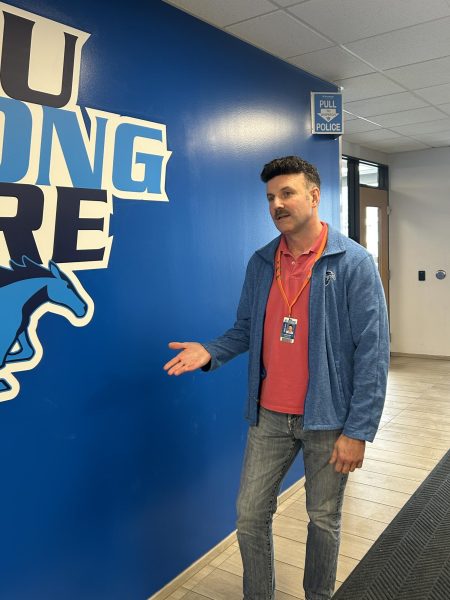
“I usually bring donuts and then they just kind of talk. So it’s just like a very loose time for them to just see that there’s other students out there in the Downer South community that are similar to what, you know, they might be experiencing,” Kaim said.
Kaim was first approached to supervise the club by former students, because they felt he cared about LGBTQ students, as well as feeling that he was someone they felt safe with. Kaim has been supervising the club ever since.
“So the club, I think, originated back in 2003, and so we did not have a PRISM club back then. And students that wanted to form a club, they actually approached me because they said that they felt like I was someone that kind of they feel safe with and that cares [about them], and so, just like with any other club, if you’re trying to form a club, you have to find an adult sponsor. So I’ve been doing it ever since,” Kaim said.
Kaim added that the location of the PRISM club has changed throughout the years, with the intention to support students’ wishes about other students or their parents, knowing that they are part of the PRISM club.
“So we used to have meetings after school, and the problem with that years ago is that some students then had to make excuses, quote unquote, for why they’re staying after school to their parents. And so they would have to lie and say, well, I’m going to Anime club when they were really coming to the PRISM club. So, changing the time to before school allows more students to come and not have to make up just alternative excuses to their parents,” Kaim said.
Sophomore and member of the PRISM club Ash Keefe said that inside PRISM, they have been able to connect with others who share the same struggles and interests, outside of most of the club members being a part of the LGBTQ+ community.
“It [PRISM club] definitely has changed my experience at DGS, because I’ve been able to make a lot of friends to this club… not just sharing the fact that we’re all LGBTQ+, but also just we share a lot of similar interests, and because we have this one, uniting factor about us… It’s made it a lot easier to make friends when I came to DGS and just helped me not feel so alone at the school.” Keefe said.
Outside the PRISM club room, Keefe gave detail on how recent school policies, such as the 10 minute cut off points for going to the bathroom at the start and end of classes, as well as not being able to go to bathrooms outside of the ones on that classrooms floor have affected their daily school schedule.
“I understand in theory why this [bathroom policy] was implemented, [but] the no going to bathrooms that aren’t on the same floor as your classroom has really affected me, because I use the gender neutral restrooms, which are only on the first floor. So I have to pretty much plan out my bathroom breaks for during first period, fourth period or sixth period, because otherwise, I’m not on the first floor, and I just can’t go to the restroom,” Keefe said.
The attitude towards LGBTQ+ students by the school and faculty is positive, treating students who are part of the community with respect and openness about their gender or sexual identity, not excluding them from in class activities or alienating them. However, the treatment of students who are part of the community have not been wholly positive, as harassment and bullying exists from students and peers.
Community and expression have given LGBTQ+ students the ability to connect and be themselves inside DGS, feeling like they truly belong here. The PRISM club has been able to give students the ability to interact and become friends with peers who are part of the LGBTQ+ community and share other interests outside of their identity, finding community and a place that understands them.
“It’s been so amazing because it gives me something to look forward to during the week. It gives me a group of people who I know will understand me, and if I am having feelings specifically relating to the [LGBTQ] factor that I know that I’m not alone in this school. Because I know there’s an entire club of people who will understand me, and who share my experiences and it’s just kind of helped me to feel I have a place in this school and that I belong here,” Keefe said.