




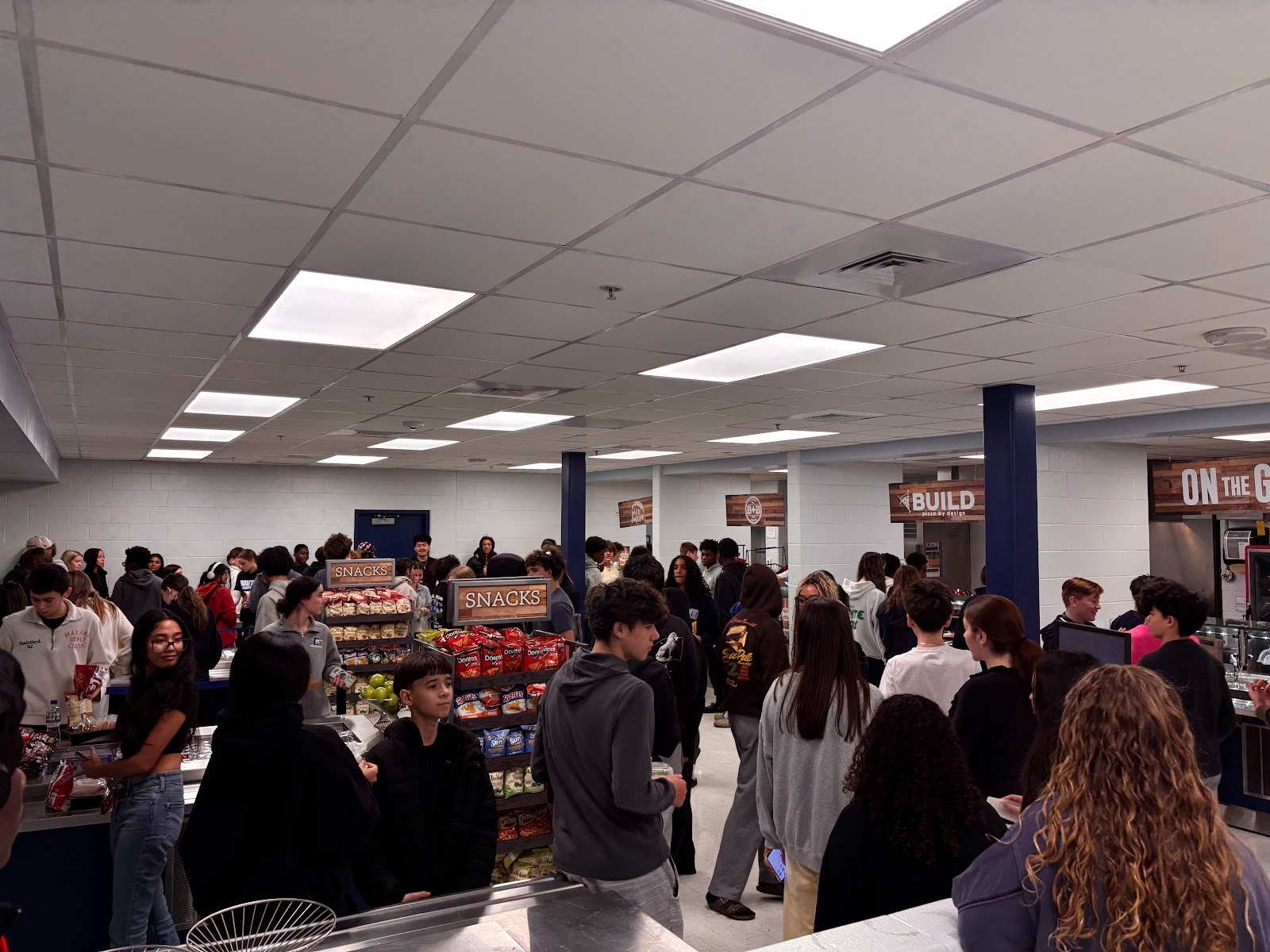
At the start of the 2025 to 2026 school year, DGS implemented brand new school policies that have widely changed the ways students, teachers and faculty operate within the campus. Along with these new policies came changes in school attitudes on student behavior: from stricter punishments for students based on tardiness to limiting phone usage inside of class. These new policies are obvious to state, but what isn’t so obvious is the ways these choices and regulations have changed the everyday school lives of both students and teachers.
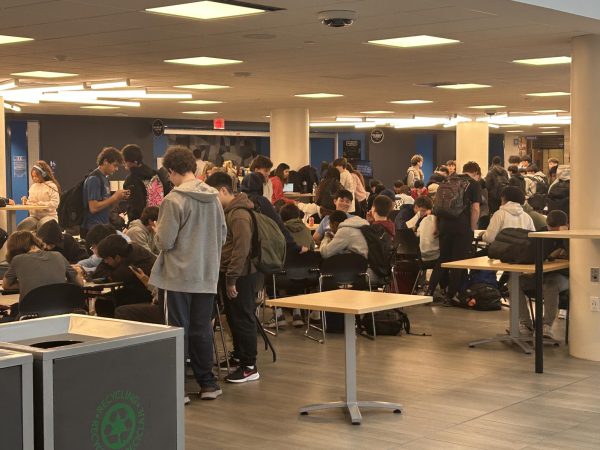
The way DGS enforces these new policies differs from previous years. Greater emphasis on arriving time, moving to class before the bell rings and student attendance. To senior Aaron Richards, the way these new policies are given to students is something he does not agree with.
“It feels more stressed on that we need to be on time more. Even though, for me, it was never a problem. I’ve been a fairly, pretty good student. Directed towards the people that have a harder time getting to class on time or have a harder time turning in stuff. I don’t know, for me, it just seems like an annoyance, just because that telling us something I’ve been doing for the last four years,” Richards said.
Like many students, Richards has a free period, where scanning in is mandatory to record attendance.
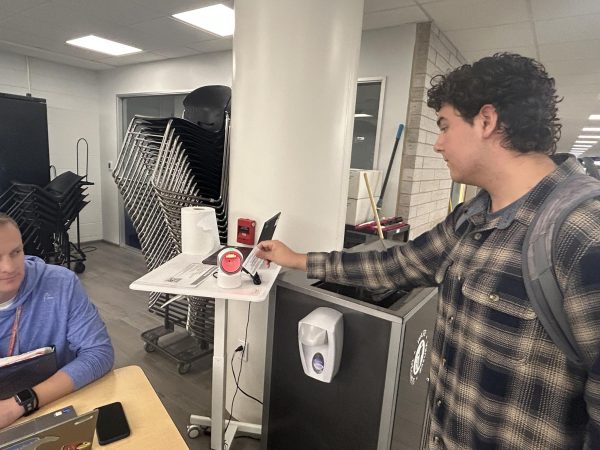
“I forget [to scan in] because they put my lunch with my [study hall] … ‘it’s my lunch, I don’t have to scan in,’ and it’s, like, oh, I forgot to scan in,” Richards said.
Social studies teacher Derek Hoovel has noticed that the implementation of these new policies has benefited student behavior not only inside classrooms, but also across campus. Giving examples to increase school efficiency, a decrease in general bad behavior around areas of the campus and noting less students being in the commons during class time.
“I would say that there does seem to be a more efficient school. People are where they’re supposed to be, people are mostly doing what they’re supposed to be. I’d feel like there are a lot less just random things going on and taking place that are inappropriate and violating school policies, you know, such as like things like vaping and whatnot, I see a whole lot less of that, which is a positive. Kids do seem to be getting to class on time. I feel like my attendance is better than it has been, at least this first semester,” Hoovel said.
Hoovel also adds that before the start of this school year, teachers were informed, during teacher institute days, about the implementation of these new policies ahead of time.
“That the implementation of these new policies have benefited student behavior across campus. Giving example to increased school efficiency, decrease in general bad behavior and noting less students being in the commons during the classes,” Hoovel said.
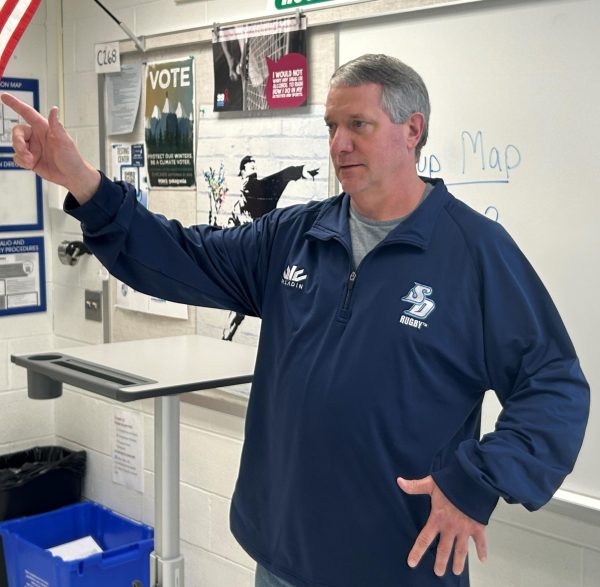
The implementation of these policies has also affected teachers positively; teachers are able to more easily prepare for attendance and can have a more secure room-according to Hoovel.
“I have to turn on the scanner each day. It takes a minute.. And overall, most of the piles aren’t really affecting me too much, at least for this year, as far as I can tell. Mostly business is normal, but you know, I don’t have to worry about where I was, students, why are they absent? Why are they tardy? Why are they not here? Why are they unexcused? A lot less of debt than I’ve had to deal with the past couple years,” Hoovel said.
Inquiries about unexcused absences can be directed to the Deans & Attendance office, located in the commons. Talk to the dean assigned under your last name by email, or request an appointment.
Junior Hyunjin Winters has had to miss school days due to their medical condition. These absences were not correctly marked inside the school’s system when they happened, and now have a permanent effect on Winters’ school record due to recent school policies. Winters’ incorrectly marked absences have greatly affected their school record and have caused them to have to give up a leadership position in Stage Crew.
“I was taken out of something [Stage Crew] that prior to this happening, I was supposed to be almost like the main person leading everything… And now I have to go back to [the] original things that I was doing as well as trying my hardest to find an in between… it’s almost like appeasing everyone to try to find it in between, when in reality it was supposed to be in between making sure my grades were fine and that I would be able to do the things that also made me an ‘academic weapon’ or anything like that,” Winters said.
Stage Crew is a club that focuses on building the stages, props and costumes for DGS theater. The club meets every day after school until 6:00 PM. Stage Crew is responsible for most of the behind-the-scenes creation of tools used by student actors in plays; Winters’ leave from a major leadership has caused ripple effects throughout the club. The DGS theater schedule can be found across the school and on the DGS Drama website.
Winters also provided that, outside of their situation, they have noticed stricter enforcement of phone policies affecting students who also need access to their phone for medical necessities during school hours.
“[Students] use it as medical devices. There’s a kid I know in my class, she is deaf and she uses her phone to sometimes listen to people when she can’t hear them. When the technology that we use at the school doesn’t work, she uses her phone to listen to the teachers speak while they’re having a discussion or giving instruction at the beginning of class; If kids are not able to do that. [The school policy] really targets them,” Winters said.
Director of student activities Jennifer Martinez says that these new school policies have created a more positive environment for both students and teachers to stay organized and for students to succeed in their academics.
“I think that the scanning into school and then also clearing out the learning commons to make sure everybody’s on time to that 1st period class, scanning into your classes, teachers revisiting the attendance to make sure that it’s accurate, that everybody’s where they’re supposed to be so that they can focus on their learning is just really important … So I think it just creates a structure that supports everybody. In regards to learning and being where you’re supposed to be and being on time, it’s nothing new, but we have put in a structure that helps support everyone to be successful,” Martinez said.
Martinez also provided that deans and directors worked together throughout last year to organize and develop these new school policies; conversations are had throughout the year to respond to students’ needs and to develop the school.
“So what I’m saying is I think that we’re always like, as a school, we’re always evolving. So there’s conversations all the time, every year… So there’s conversations all the time about what’s going on in our building and how can we make improvements… Ever since the beginning of last year, to then have conversations and continue to work over the summer to then get to where we’re at,” Martinez said.
Recent school policies, scanning into class and stricter restrictions on phones inside of classrooms have affected both students and teachers behavior on campus in different ways.
“It’s not really just the idea of just phones, It’s also as well like Chromebooks, and it kind of feels like those policies don’t really help at all. Same thing with scanning. It’s not helping either-at all. I mean, kids are still skipping. I can see it [in] real time. Like I mean, it’s just everywhere really,” Winters said.
“I think it’s been a great year so far, and I hope it continues to be a great year,” Martinez said.