



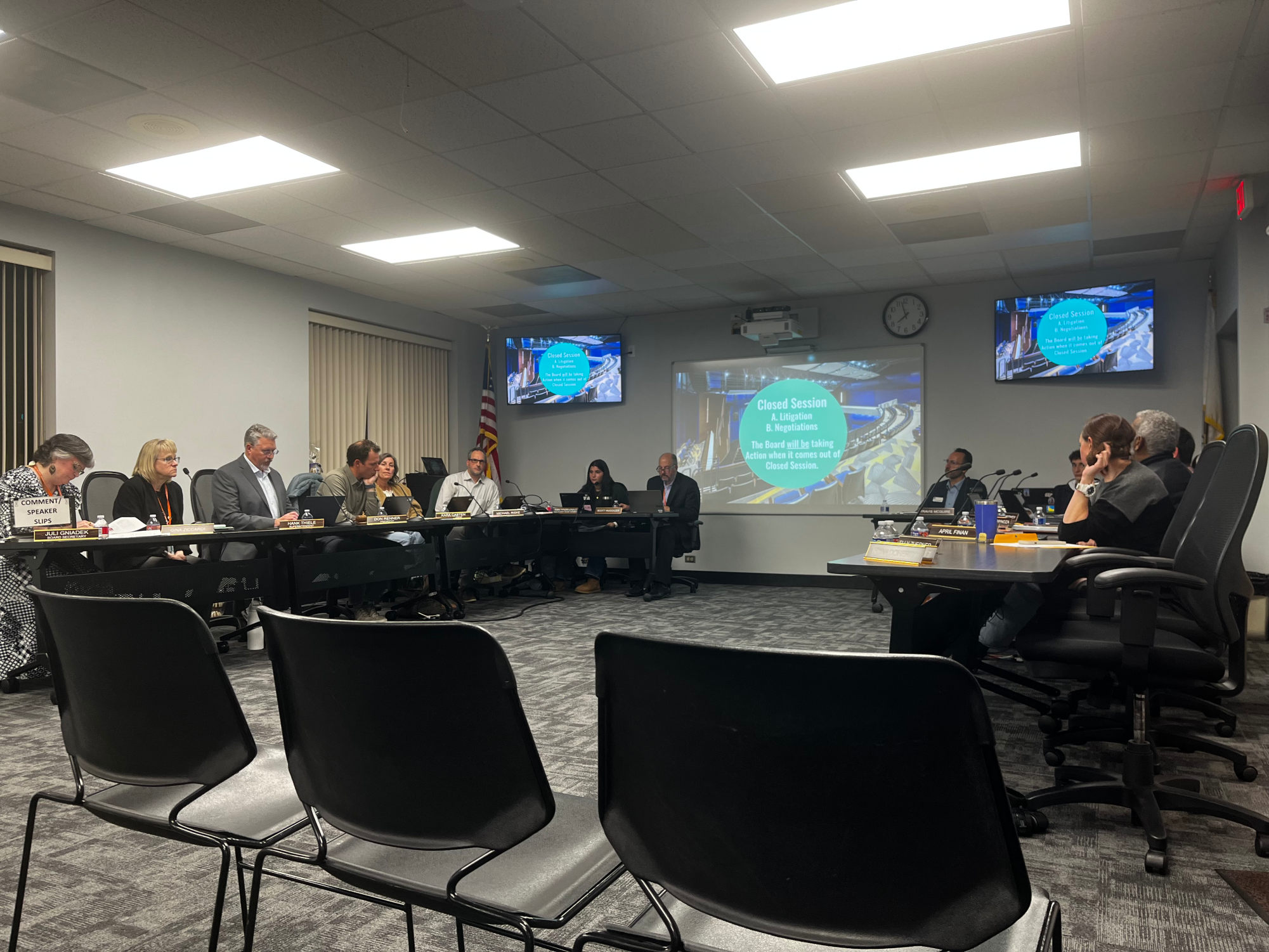
On Nov. 17, 2025, the Downers Grove District 99 board met for its monthly business meeting at the District 99 Administrative Service Center, shedding light on numerous community and school issues.
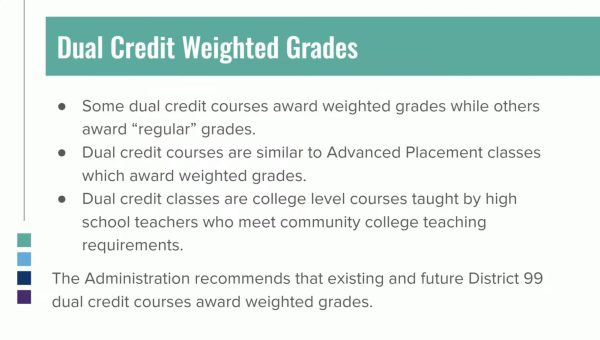
One topic discussed throughout the night was giving a weighted credit to all dual credit courses in the district. Dual credit courses are college-level classes taught by high school teachers that meet community college standards.
Superintendent for student learning Gina Ziccardi led the discussion on the matter.
“A student’s GPA reflects that they’ve taken a higher-level course, and they get that weighting [for their grade]. So, for example, a student gets a B and the course is weighted … it’s like getting an A,” Ziccardi said
Similar to the AP courses offered that already have weighted grades, dual credit courses contain college-level content coursework. Ziccardi argues that this higher-level course should thus receive additional weight in a student’s grade.
Superintendent for Community High School District 99 Dr. Hank Thiele shared his perspective on giving weight to the courses.
“It reflects the rigor of the work that is collegiate level,” Thiele said.
While some of these courses can already be taken as an honors class, the administration hopes for weighted credit for every one of them. However, the weighting would only be applied to courses in the 2026-2027 school year and on.
Amongst discussions about dual-credit courses, Ryan Doherty, director of student experiences, led reviews of surveys from students, faculty and families.
The night followed the progress of surveys first given in Oct. of 2022 to the most recent from March of 2025, and looked into topics to survey for one in March of 2026. The annual surveys were regarded as catalysts for changes toward the access and resource period, phone policies and daily schedules to combat problems with attendance and preACT/ACT scores.