



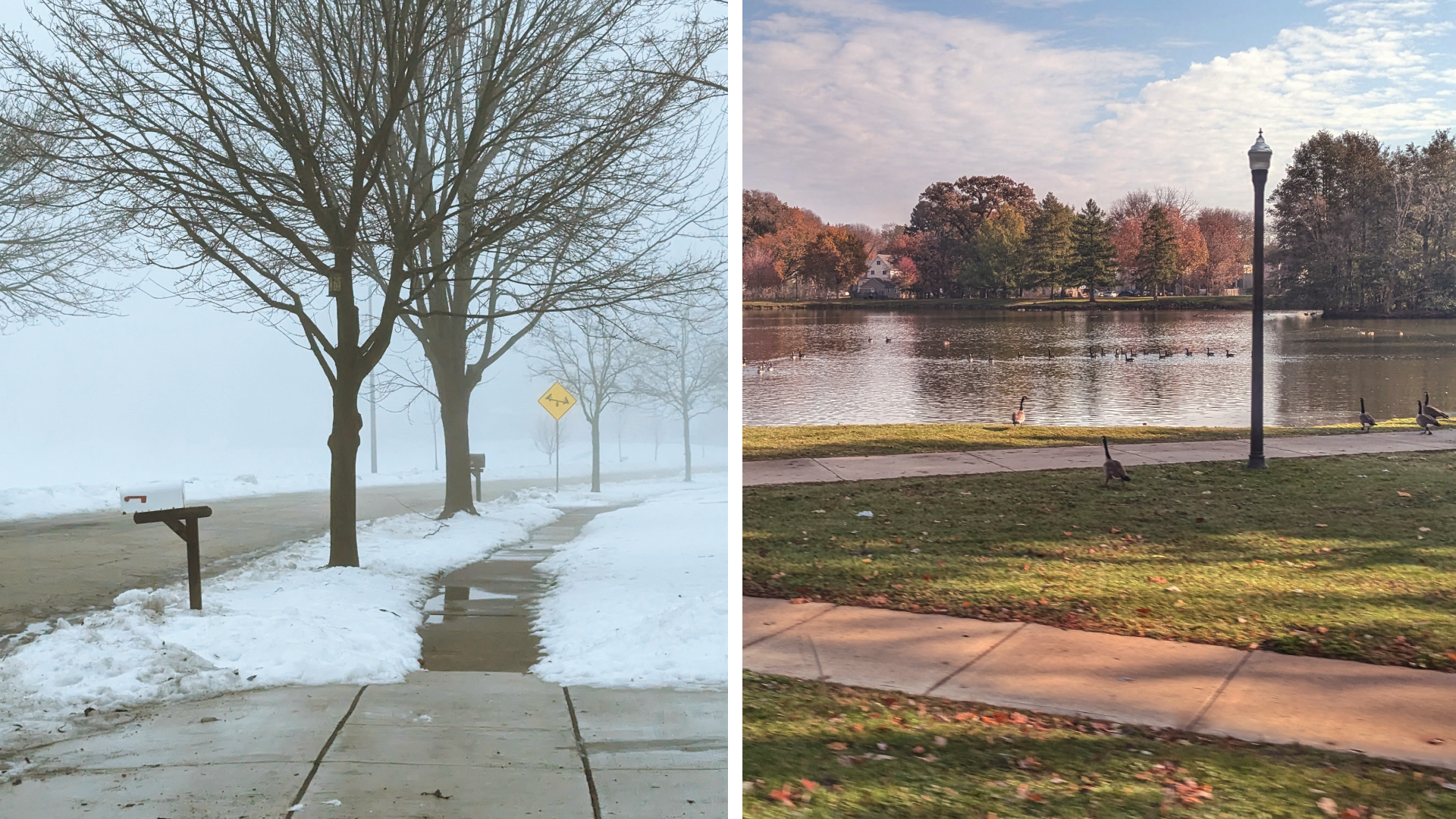
Midwestern fall, the season of pumpkin spice lattes, students dressed as skeletons and falling leaves blowing in the wind. Midwestern winter, the season of hot chocolate, students dressed in as many layers as possible and wind that could freeze your fingers off. It may seem clear which season is better or worse, but the truth is more complicated than you might think.
For instance, let’s take a look at one of the biggest differences–the weather. The average maximum temperature around Chicago during October 2024 was 70 degrees, with the average minimum being 51 degrees. During December of 2024 in the Chicagoland area, the average maximum temperature was 31 degrees, with the average minimum being 17 degrees.
You may be thinking that you’d rather experience the much warmer 70 degrees compared to the wintry 31-degree freeze. However, with a low of 51 degrees, it becomes much harder to dress appropriately. Instead of preparing for the constant cold you’d experience in winter, you have to prepare for a chilly morning and a warm afternoon.
This weather doesn’t just affect your style–anything with air conditioning, from cars to buildings, also deal with the switch-up of autumn weather. If you drive somewhere in the morning in 50 degree weather with hot air blowing and switch the air conditioning on later that day in 70 degrees, you’ll be in for a surprise. For larger buildings, such as schools, preparing for the warmer afternoon weather is optimal and cheaper than having both heating and cooling during the day, which means your early classes are freezing.
Temperature is a big influence when it comes to weather, but what can be even worse is what comes from the sky. Autumn typically brings freezing rain, which can be detrimental if you’re not prepared to dress warmly, especially when you consider how absorbent fall clothes can be. Snow in winter isn’t a big issue; your body is already covered in big, puffy clothes and your face and head can be covered with hats and scarves.
The weather also affects wildlife and insects around the Midwest. During fall you may have to watch out for geese, spiders, chipmunks and other pesky or annoying creatures. During winter you’ll mostly find smaller birds, and sometimes you may find deer, foxes and other animals.
There’s also a big difference in midwestern activities you can participate in during the winter and fall. For example, in autumn you can build piles of leaves, sit around a fire, carve pumpkins or do other mundane activities.
Winter, on the other hand, offers a variety of activities: people can creatively build snowmen, excitedly ski, snowboard and sled down snowy hills or spend a relaxing night watching movies with their families.
Speaking of movies, winter has many amazing movies based around the season and Christmas, including the legendary Chicago-based “Home Alone.” Autumn, on the other hand, doesn’t have much apart from the occasional Halloween movie setting and horror flick. The winter movie-watching atmosphere is simply supreme compared to fall as well, with warm blankets, dim lighting, a cozy fireplace and family all around.
There are many differences between fall and winter in the Midwest, but it’s clear that winter reigns supreme. Everything from the weather to movies is always better in winter compared to autumn.
Henry Pearson • Nov 12, 2025 at 12:22 pm
More people should be voting! This is a valid argument.
Liam Wells • Nov 5, 2025 at 1:40 pm
rlly good article!